Living Room Lighting Trends: 6 Sculptural Schemes for 2027
Harsh overhead illumination is officially losing its place in sophisticated interior design. As we look toward the defining living room lighting trends, ambient atmosphere and structural beauty have taken absolute priority over utilitarian ceiling fixtures. Modern living spaces require a nuanced approach that treats every lamp, pendant, and sconce as both an illuminated sculpture and a functional tool for spatial harmony.
By moving past identical, mass-produced fixtures, these evolving living room lighting trends embrace hand-crafted character, varied light heights, and organic materials. The following expert strategies reveal how to replace flat ceiling grids with dynamic visual warmth.
1. Free-Flowing Architectural Forms
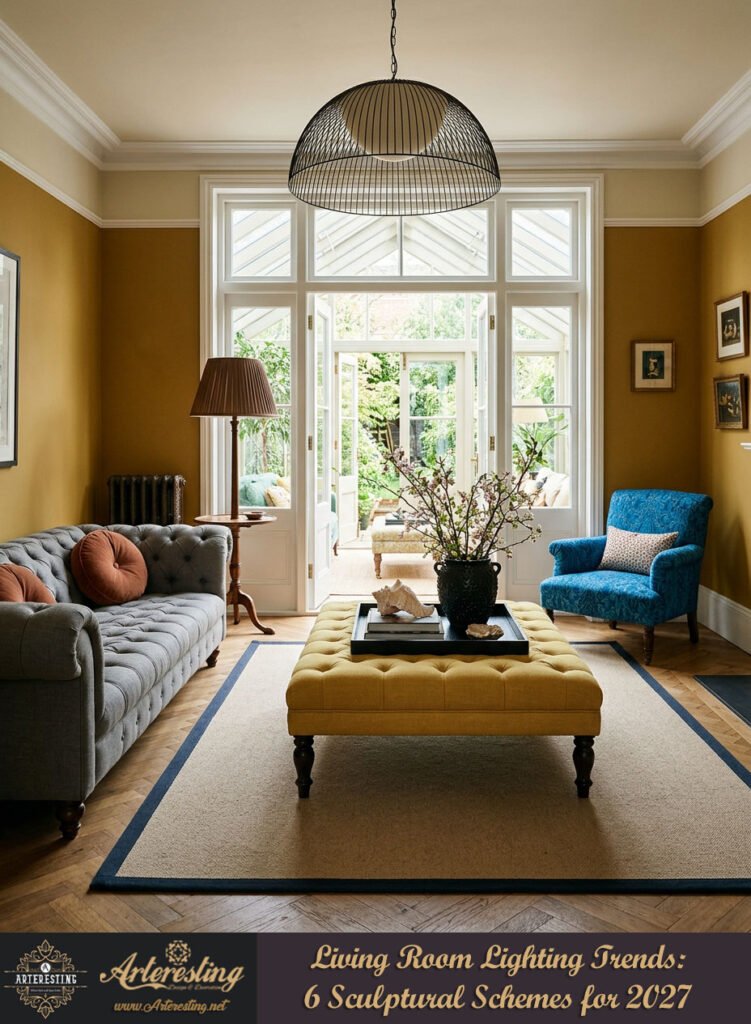
Sculptural lamp bases and fluid, hand-shaped shades are replacing rigid geometry, turning everyday light sources into commanding works of art.
Integrating fluid silhouettes into modern spaces breaks up the harsh, straight lines of conventional furniture. Organic contours draw the eye across the room, providing a focal point even when the fixture remains unlit. Materials such as hand-blown glass, alabaster, and patinated metals introduce rich tactile depth into understated, modern spaces.
Visually, these artisanal forms act as structural anchors. Place a sweeping floor lamp beside a low-profile sofa to create balance without cluttering the room’s sightlines.

2. Handmade Vintage Styles
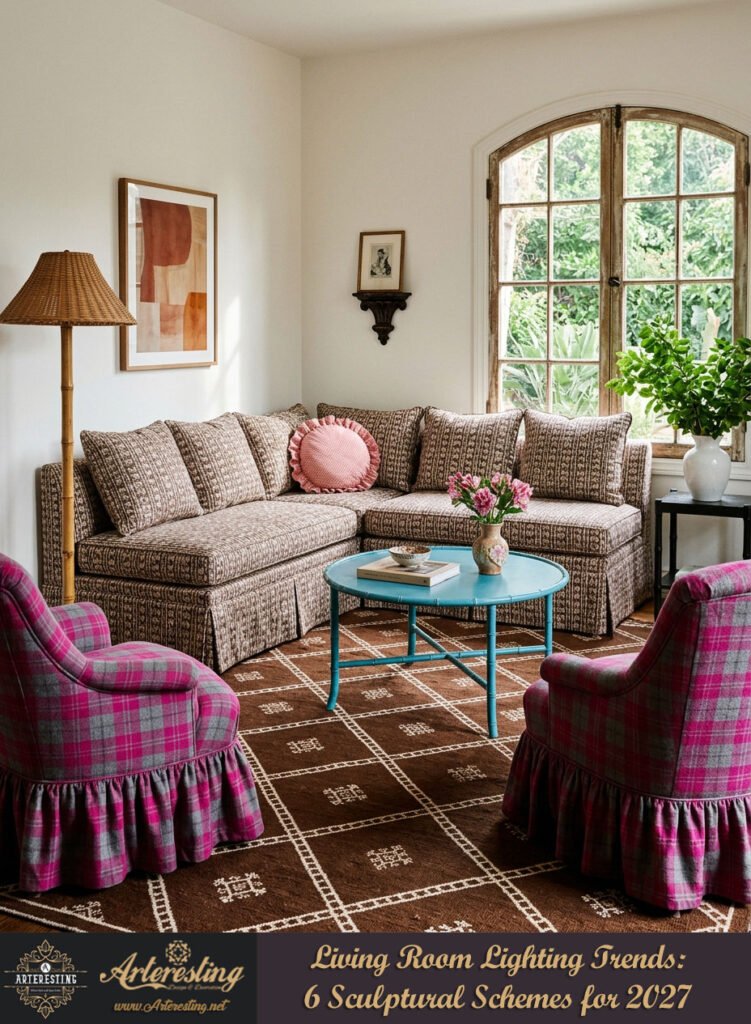
Curated vintage lighting brings historical character, tactile irregularities, and eclectic authenticity to modern home decor.
Sourcing pre-loved fixtures allows living spaces to feel thoughtfully assembled over time rather than styled straight from a single catalog. Chunky 1970s ceramic table lamps, Art Deco sconces, and classic Murano glass pieces offer unique patinas that factory-new items cannot match. Rewiring older pieces and pairing them with fresh linen shades creates an instant designer upgrade.
Furthermore, acquiring lighting through estate sales or specialized vintage dealers gives your room custom personality. These one-of-a-kind accents ground living room lighting trends with lasting historical weight and charm.
The Heritage Plaid Collection
Bring warmth and timeless tradition to your next sewing or upholstery project. Discover our premium, custom-printed fabrics featuring classic crimson tartans, rustic navy weaves, and rich teal plaids.


3. Layered Ambient Illumination Schemes
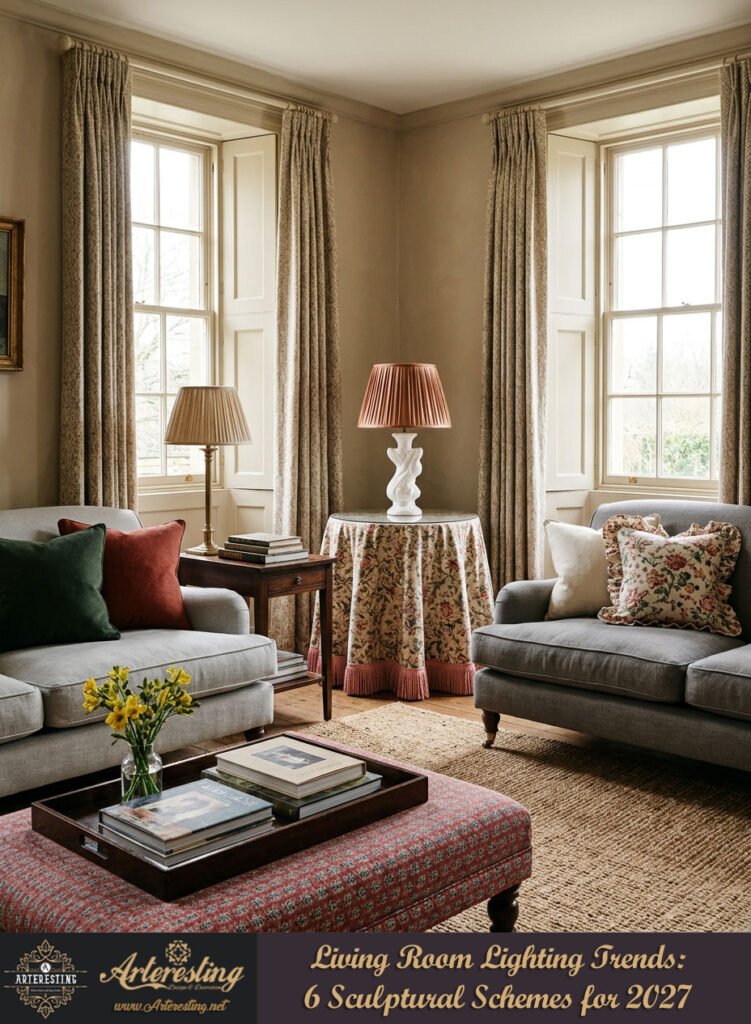
A successful lighting plan avoids relying on a single light source, using varied fixture heights to create a warm, inviting atmosphere.
Relying on a single overhead light flattens a room, stripping away its architectural shadow and dimension. True ambient depth requires placing light sources across low, mid, and high planes throughout the room. Integrating understated wall sconces near millwork, dedicated picture lights over artwork, and floor lamps beside armchairs establishes a rich visual rhythm.
Crucially, your fixtures do not need to match perfectly. Choosing complementary materials like brushed brass alongside matte earthenware creates a natural, collected look while maintaining cozy balance across small and large floor plans alike.
The Moody Botanical Collection
Add deep, dramatic elegance to your living space. Discover our curated selection of throw pillows featuring rich vintage chinoiserie, Victorian crimson peonies, and lush velvet leaves.


4. Semi-Translucent Paper and Parchment Shades
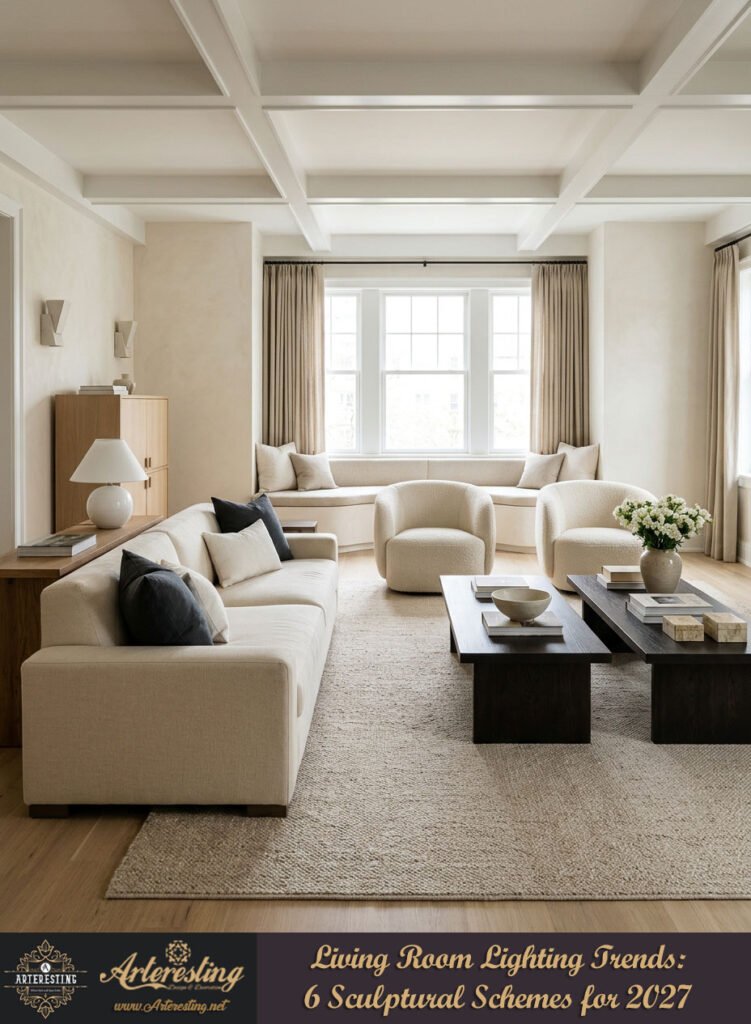
Light-filtering paper and parchment shades soften harsh bulb glare, casting a gentle, diffused glow across surrounding surfaces.
Rooted in vintage Art Deco craftsmanship, parchment and pleated paper shades filter light with exceptional subtlety. Their natural semi-translucency creates a soft diffusion that highlights subtle textures on plaster walls, exposed brickwork, and warm wooden furniture.
These lightweight materials add a tranquil, tailored touch to living room lighting trends. Pair organic paper shades with rich timber accents or soft, muted upholstery to design a relaxed, elegant space made for evening unwinding.
The Signature Gallery Collection
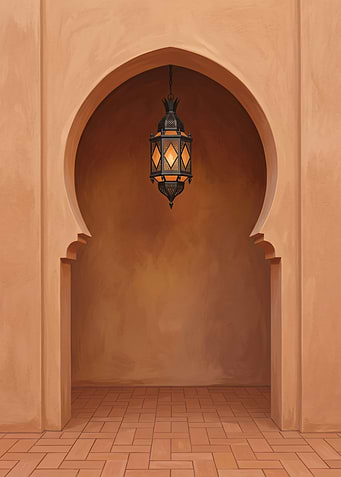
Elevate your walls with premium magnet-mounted metal art. Discover our curated gallery featuring enchanting Moroccan archways, golden boho deserts, and cozy feline artistry.


5. The Phasing Out of Recessed Ceiling Cans
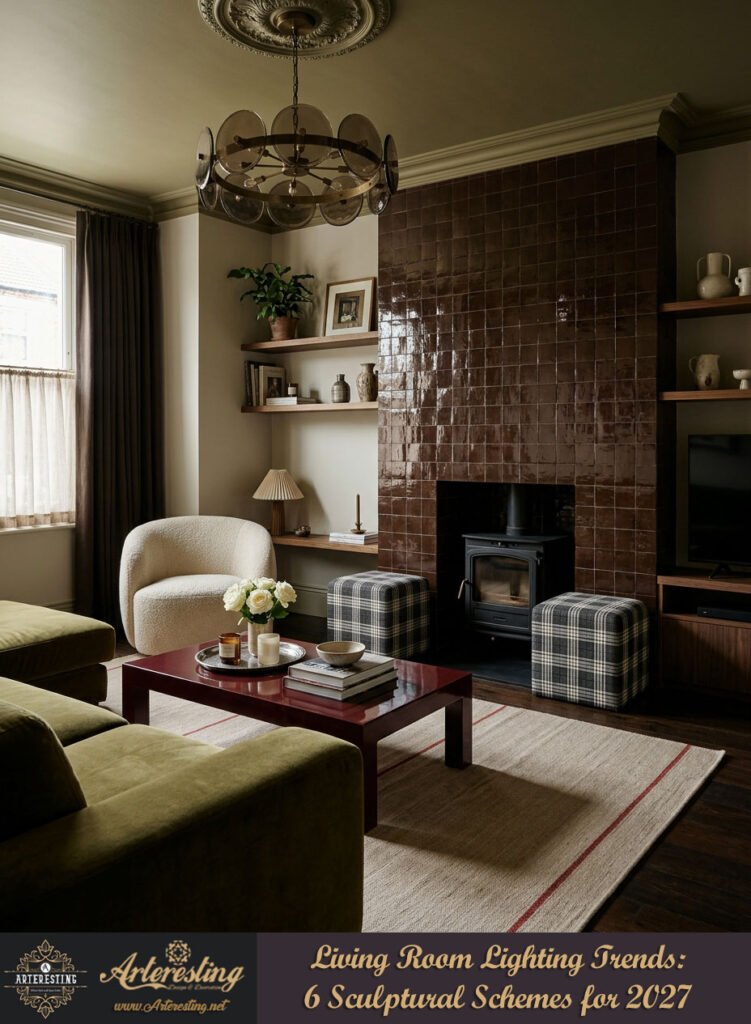
Overhead downlights are stepping back from center stage, giving way to directional fixtures and floor-level lighting.
Grid-style recessed ceiling cans often produce unflattering shadows and create a sterile, clinical environment. Modern design direction shifts focus toward discrete architectural micro-trim downlights paired with decorative lamps that shine at eye level. This approach ensures general illumination never overwhelms the room’s broader decorative story.
Therefore, replacing dominant ceiling fixtures with wall-mounted sconces and low-level accent lamps yields an instantly warmer, more relaxed setting. Letting ambient fixtures take center stage makes living environments feel grounded, personal, and intentionally designed.
The Statement Wallpaper Collection
Transform your walls into breathtaking focal points. Discover our premium custom-printed wallpapers featuring vintage tropical palms, intricate Art Nouveau botanicals, and retro mid-century suns.


6. Spatial Zoning with Micro-Illumination
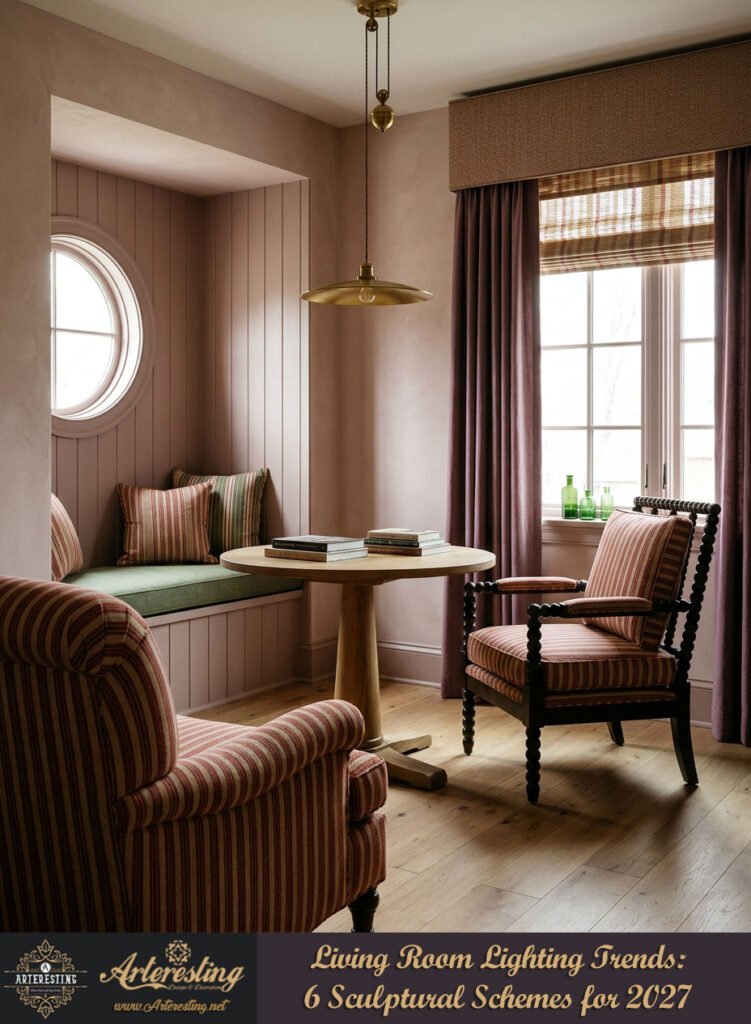
Targeted wall sconces and focused task lamps redefine open floor plans by creating distinct functional zones without structural walls.
Strategically placing directional light sources in nooks helps carve out private, functional micro-zones within larger communal spaces. A single articulated wall sconce can instantly convert an unused corner into a cozy reading retreat without taking up precious floor area.
Similarly, mounting sleek sconces alongside custom window benches or built-in seating highlights underutilized architectural details. This localized approach enhances how your floor plan functions day to day while remaining a vital pillar of contemporary living room lighting trends.
The Quiet Luxury Collection
Elevate your space with subtle, sophisticated textures. Discover our refined selection of throw pillows featuring celestial pinstripes, rustic woven linens, and muted rose vertical stripes.


The post Living Room Lighting Trends: 6 Sculptural Schemes for 2027 appeared first on Arteresting.


Comments
Post a Comment