Cosy Living Room Ideas: 10 Ways to Master Spatial Warmth
As temperatures plummet, mastering spatial warmth becomes a strict architectural priority. Implementing sophisticated cosy living room ideas goes far beyond simple seasonal decorating. Consequently, it requires a highly calculated approach to tactile layering, structural styling, and color psychology. Homes must evolve gently with the seasons. Specifically, swapping lightweight linens for heavy velvets shifts the room’s entire frequency. Therefore, we approach winter styling as a precise science of comfort.
1. Botanical Prints and Earthy Tones for Cosy Living Room Ideas
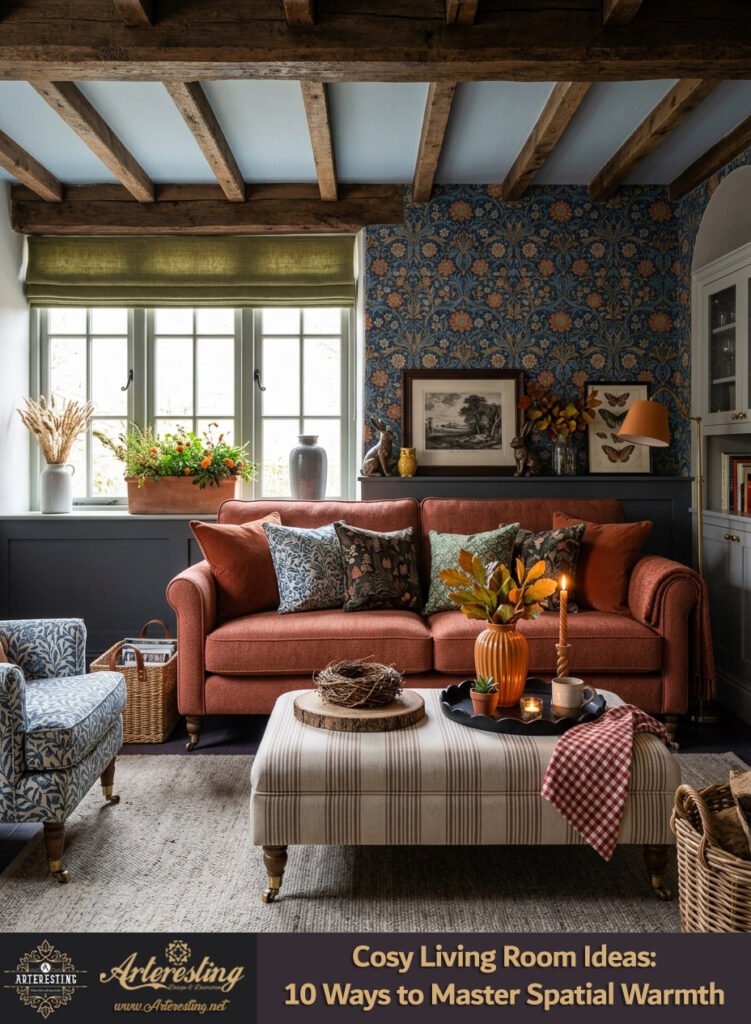
Introduce organic wallpaper patterns like William Morris motifs to wrap a room in visual texture. Earthy colors and botanicals soften sharp winter daylight, transforming walls into an immersive, cocooning environment that encourages extended relaxation.
Nature provides the ultimate blueprint for spatial harmony. Trailing leaves and woodland patterns break up rigid architectural lines. Furthermore, color-drenching the ceiling pulls the visual weight downward. This creates an immediate sense of enclosure.
The Psychology of Organic Patterns
Sumptuous sofas in rich, earthy pigments absorb shadows beautifully. Visually, this grounds the space immediately. Ultimately, the room becomes a highly functioning sanctuary designed for deep winter hibernation.
2. Textile Wall Hangings for Acoustic Warmth
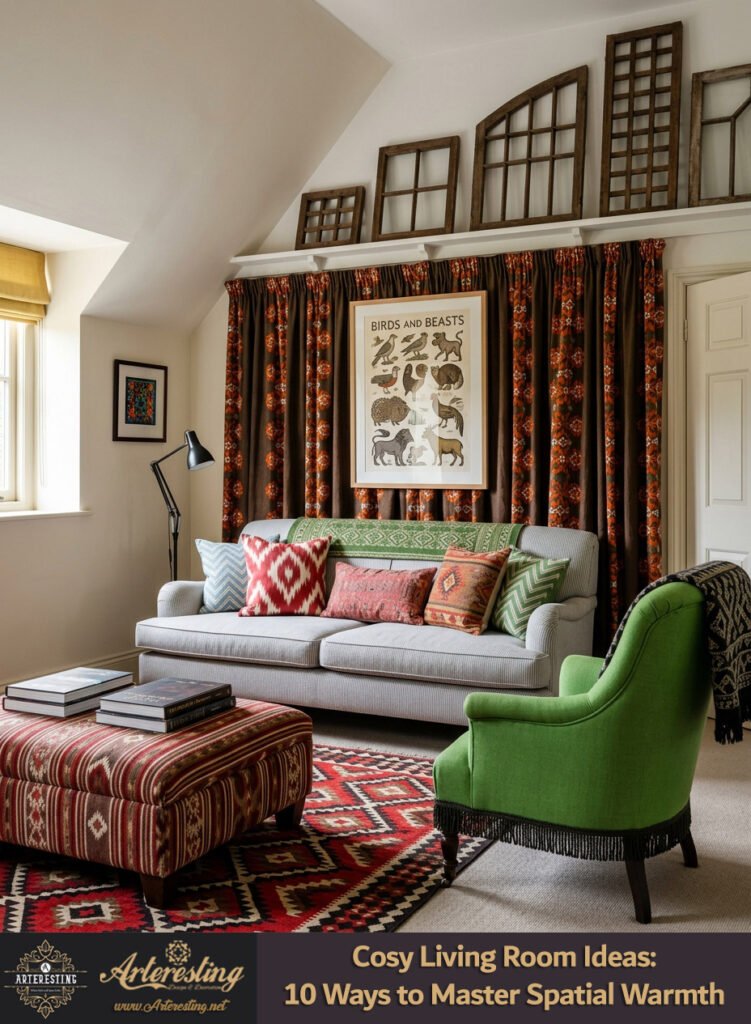
Suspending fabric directly on walls introduces massive blocks of color and texture economically. This tactile application dampens harsh echoes, insulates cold plaster, and allows for rapid seasonal updates with simple pins and intentional pleating.
Large-scale framed art can feel structurally cold. Conversely, fabric softens the perimeter of a room. Fixing textiles with soft pleats introduces gentle, organic movement. Specifically, this technique disrupts flat, rigid walls.
Seasonal Fabric Rotations
You can swap heavy wools for lighter weaves as seasons turn. Therefore, the room’s acoustic and visual temperature remains entirely within your control. Heavy fabrics inherently absorb sound, maximizing acoustic comfort.
3. Foraged Organic Accents
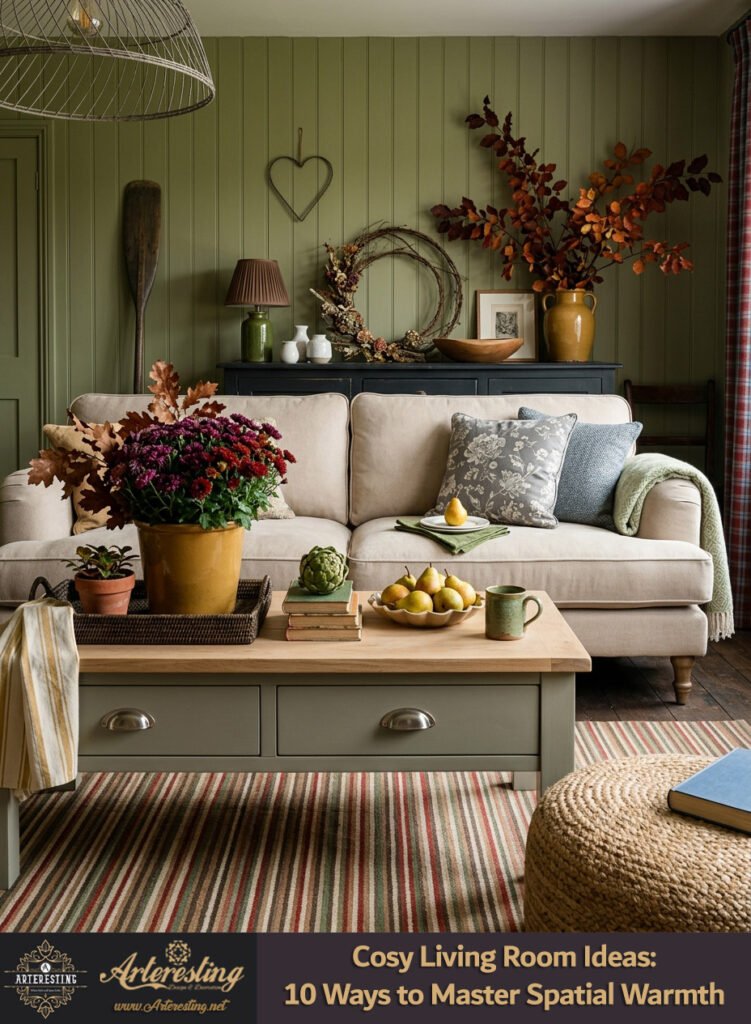
Ground your interior architecture by introducing raw, foraged elements from the outside environment. Incorporating stacked logs, weathered shells, or dried wildflowers introduces irregular, organic geometry that balances overly polished, manufactured furniture pieces.
A room needs friction to feel authentic. Polished surfaces demand the stark contrast of raw nature. Consequently, placing a basket of rough-hewn logs near the hearth anchors the styling.
Curating Natural Geometry
Dried wildflowers offer brittle, delicate textures. Similarly, beach-combed shells add calcium-matte finishes. Visually, these foraged items remind occupants of the shifting landscape outside. Thus, the interior feels connected to the earth.
4. Color-Drenched Snugs: Warm Living Space Concepts
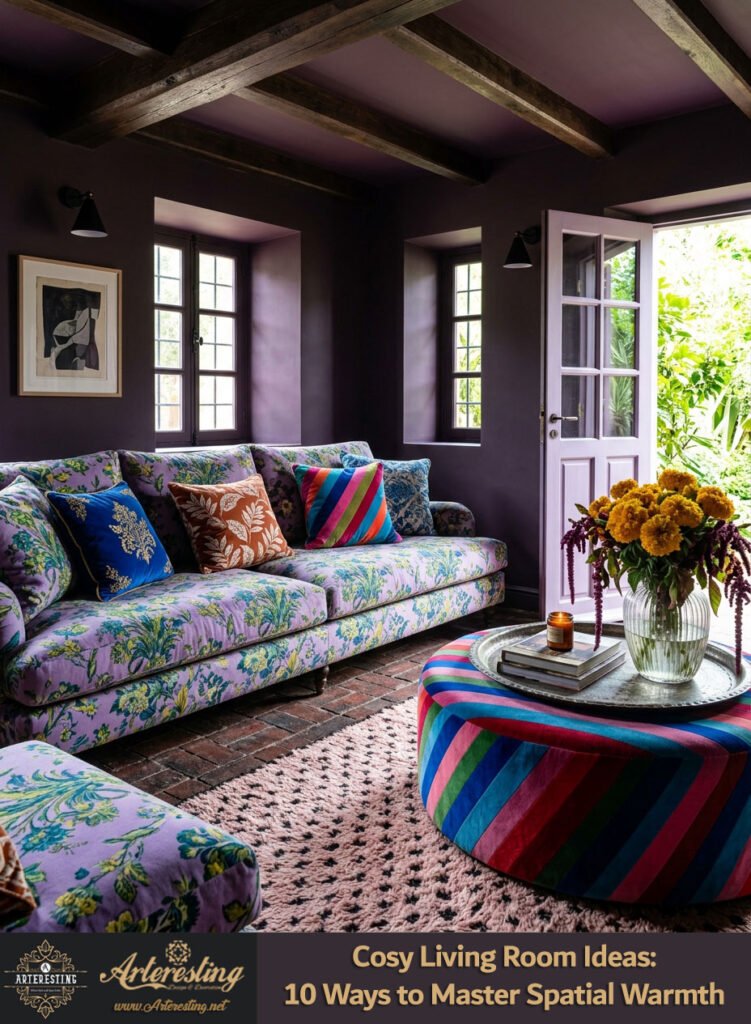
Dedicate a small room entirely to comfort by wrapping it in deep, immersive colors and installing a bespoke corner sofa. Maximizing seating in a constrained footprint prioritizes physical relaxation while dark hues blur physical boundaries.
Deep colors deliver immediate spatial intimacy. Pushing a large, customized corner sofa against the walls reclaims the floor plan. Specifically, it surrenders the majority of the room to pure comfort.
Manipulating Light with Finish
Flat paint can deaden a small, dark space. Therefore, apply a high-gloss finish to deep-toned woodwork. Crucially, the gloss catches and refracts whatever natural light remains. This prevents the snug from feeling oppressive.
5. Bright Scrubbed Pine for Light Maximization
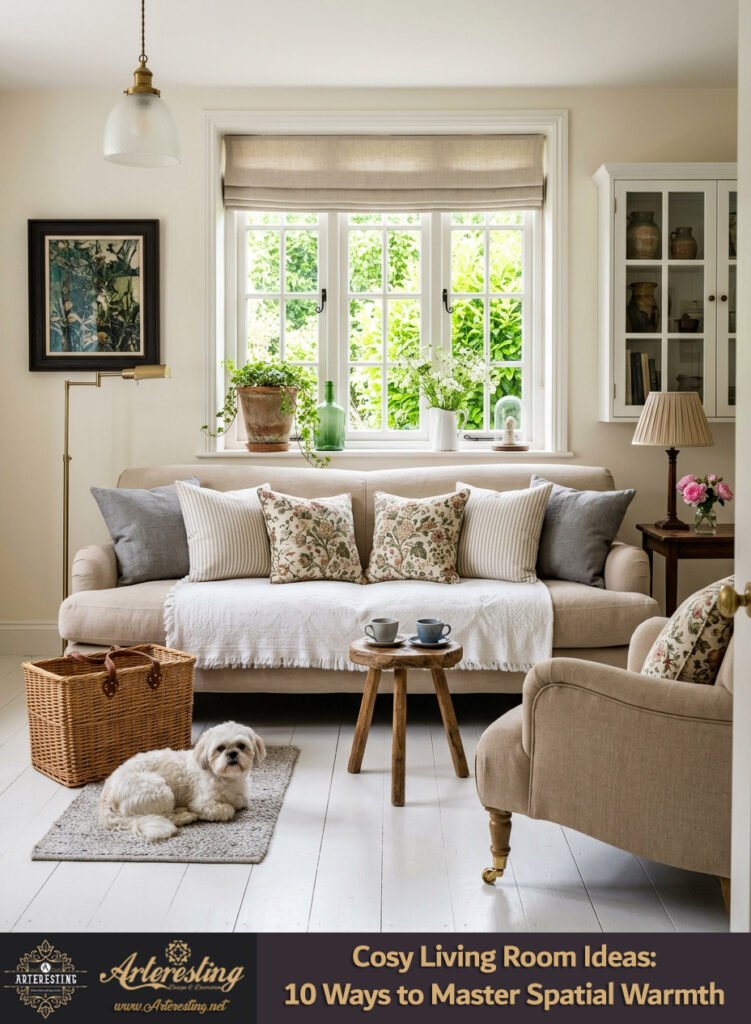
Combat gloomy winter mornings by anchoring the room with pale painted finishes and scrubbed pine furniture. Pairing these light-reflective surfaces with sheer window treatments maximizes scarce daylight, maintaining an uplifting, airy atmosphere despite the cold.
Autumn mornings often bring heavy, grey skies. Consequently, your interior must actively work to harvest daylight. Searching for cosy living room ideas does not strictly mean embracing darkness. Scrubbed pine tables provide warmth without visual heaviness.
Strategic Window Styling
Heavy curtains block crucial morning rays. Instead, utilize lightweight window dressings. Thus, you maximize solar gain at every possible opportunity. The resulting space feels bright, crisp, and incredibly inviting.
6. Sage Green for Amber Light Enhancement
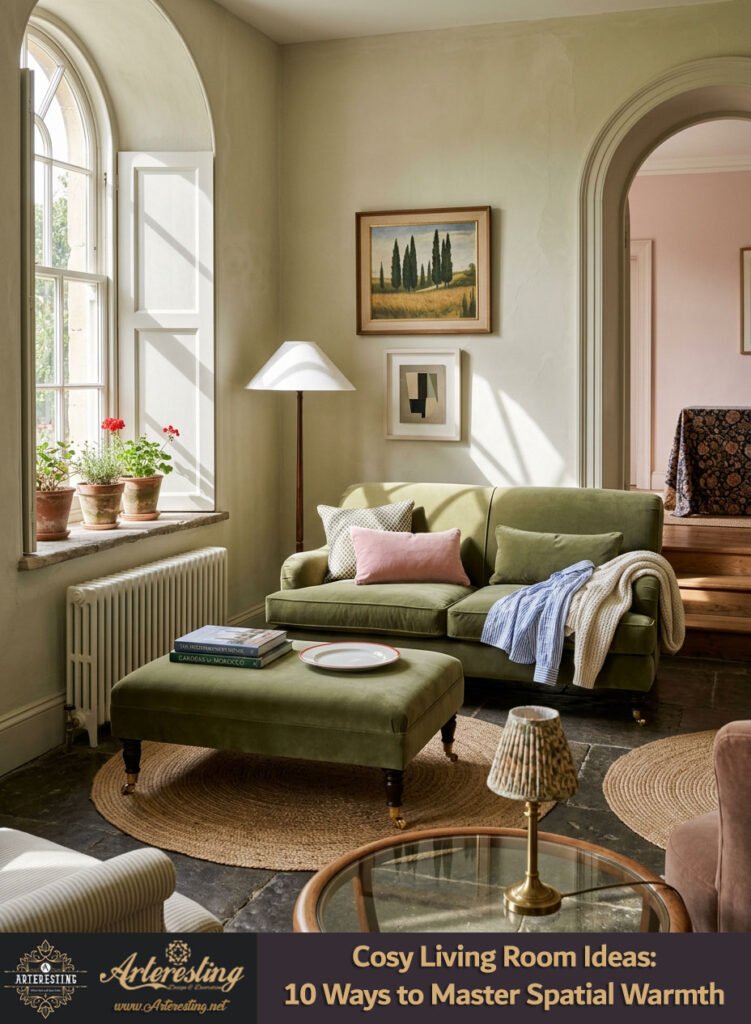
Paint walls in sage green to beautifully harmonize with the low, amber trajectory of autumn afternoon light. This transitional hue acts as a bridge between seasons, bringing the feeling of shifting hedgerows indoors to counteract grey days.
As the earth tilts, natural light changes its behavior. Afternoon rays become distinctly richer and warmer. Sage green responds dynamically to this specific amber light. Furthermore, it feels grounded and earthy.
Defending Against Winter Grey
Surrounding yourself with organic green wards off seasonal gloom. Specifically, the color recedes, expanding the room visually while maintaining profound emotional warmth. It forms a masterful, sophisticated backdrop for heavy textiles.
7. Wood-Burning Stoves for Snug Interior Design
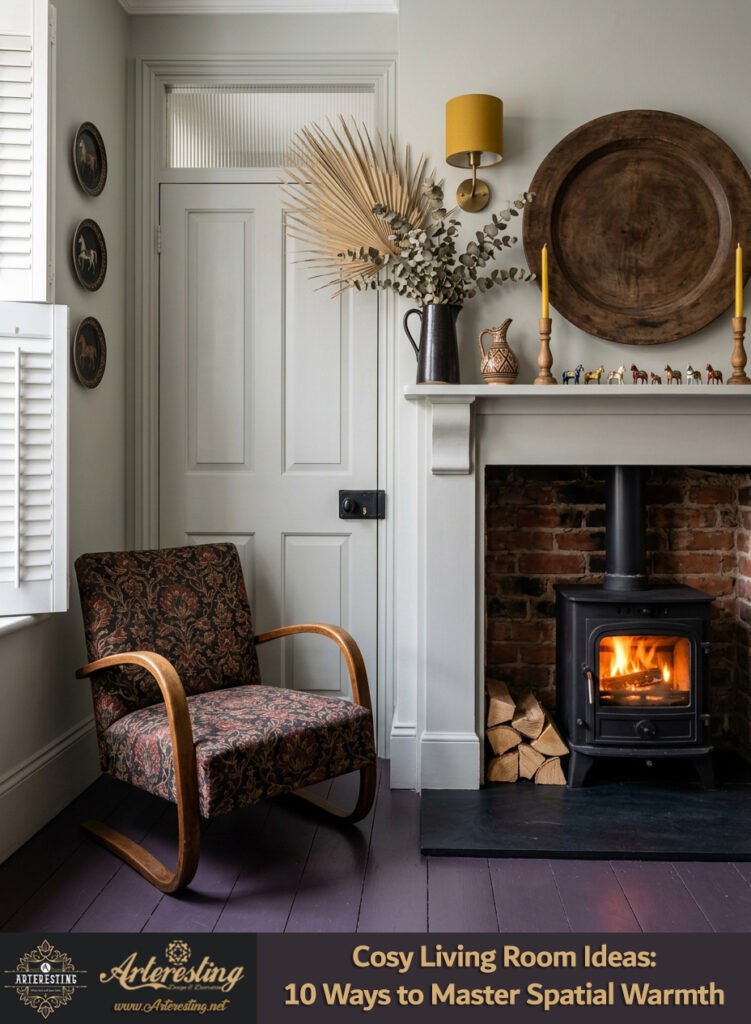
Install a wood-burning stove as the central focal point for ultimate winter comfort. Elevate the hearth by styling it with tactile accessories like stacked logs, rough hessian sacks, and woven baskets to frame the fire.
A live fire taps directly into primal comfort. However, the architectural styling of the hearth dictates the room’s success. An isolated stove looks visually cold when unlit. Therefore, you must build a purposeful vignette.
Framing the Heat Source
Stack logs in woven storage baskets for immediate texture. Additionally, drape a heavy hessian sack near the iron tools. Finally, pull an occasional chair close to the heat. This creates the most coveted seat available.
8. Architectural Layering of Textiles
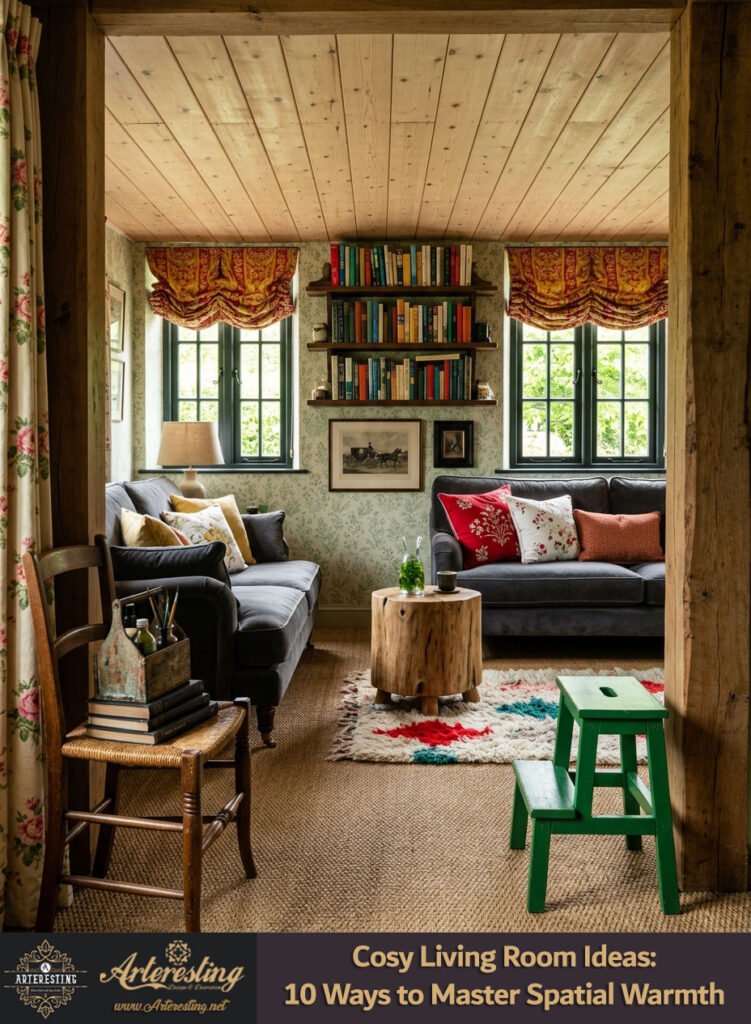
Generate immediate physical comfort by aggressively layering throws, cushions, and floor rugs. Overlapping mismatched textiles breaks rigid design grids, introducing a highly tactile, informal aesthetic that feels inherently lived-in and welcoming.
Minimalism feels incredibly hostile in December. True warmth requires aggressive, deliberate layering. Pile heavy wool throws across structured sofa arms. Visually, this softens the room’s hard, structural geometry.
The Rule of Asymmetry
Never match your textiles perfectly. Overlap heavily textured rugs across the floorboards. Crucially, this creates a distinct shortcut to an informal, deeply relaxed environment. The resulting friction between fabrics builds incredible visual depth.
9. Compact Loveseats for Spatial Intimacy
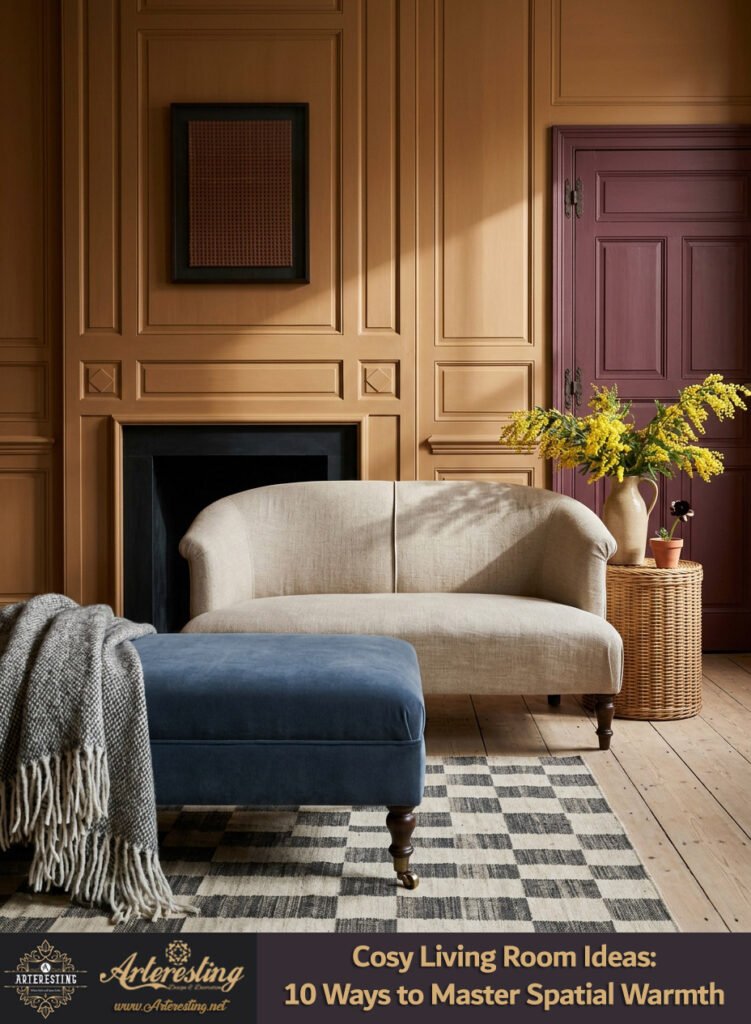
Introduce a loveseat to activate unused corners and create a dedicated zone for reading or quiet contemplation. These compact pieces offer a snug, enclosed seating experience that larger sofas simply cannot replicate during colder months.
Large sofas naturally encourage sprawling. Conversely, loveseats demand strict intimacy. They fit perfectly into awkward architectural alcoves. Thus, they activate dead space highly effectively.
Purposeful Solitude
While two people can share one, they serve best as an oversized lounger. Consequently, curling up in a loveseat feels distinctly secure. It remains the ultimate furniture choice for solitary winter reading.
10. High-Gloss Black Paint: Cosy Living Room Ideas for Dark Corners
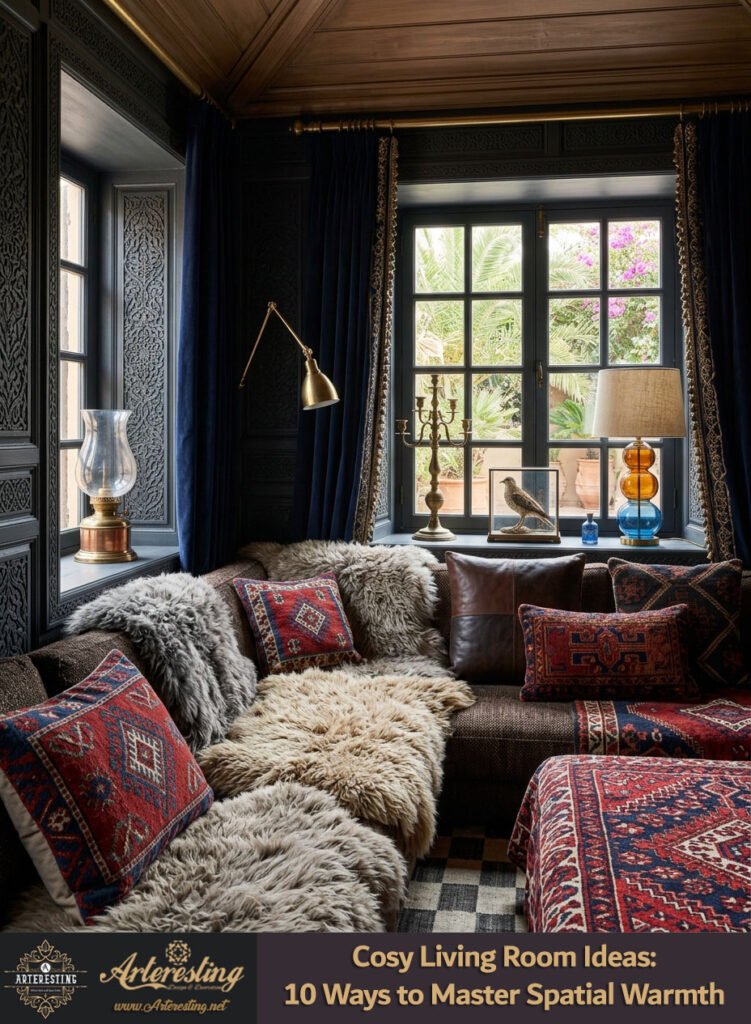
Embrace shadows by painting dimly lit corners in high-gloss black. This counterintuitive approach uses the paint’s sheen to bounce low-level lamplight around the room, establishing a moody, sophisticated, and deeply relaxed evening ambiance.
Fear of dark paint ruins many promising living rooms. Black creates a compelling, infinite depth in a constrained space. However, matte black absorbs absolutely all light. Therefore, a slight sheen is entirely vital.
Illuminating the Shadows
The gloss acts as a subtle mirror for ambient lighting. Specifically, position low-level lamps to graze the dark walls. Ultimately, this generates a moody, relaxed atmosphere. It welcomes you completely on a freezing winter night.
Implementing these foundational cosy living room ideas transforms a basic layout into an elevated, tactile retreat. True comfort relies on structural intention. Therefore, focus heavily on layering, manipulating light, and embracing deep tones.
Executing cosy living room ideas requires strategic layering of textiles, intentional lighting, and rich color palettes. High-gloss dark paints and organic botanical patterns anchor the space, while tactile elements like wool throws and wood-burning stoves establish physical warmth. Together, these techniques transform a standard lounge into an elegant, seasonally adaptable retreat.
The post Cosy Living Room Ideas: 10 Ways to Master Spatial Warmth appeared first on Arteresting.


Comments
Post a Comment