Whimsical Interior Design: 7 Unexpected Ways to Add Charm
Sterile, monochromatic spaces no longer dictate modern luxury. Consequently, the pivot toward character-driven architecture is redefining how we interact with our living environments. Integrating whimsical interior design brings necessary warmth and visual intrigue to rigid spatial layouts. Specifically, contemporary styling embraces unexpected textures and structural charm over flat minimalism. Therefore, this guide outlines seven precise interventions for introducing sophisticated playfulness into your home.
Anchor the Dining Room with Sculptural Majolica Plates
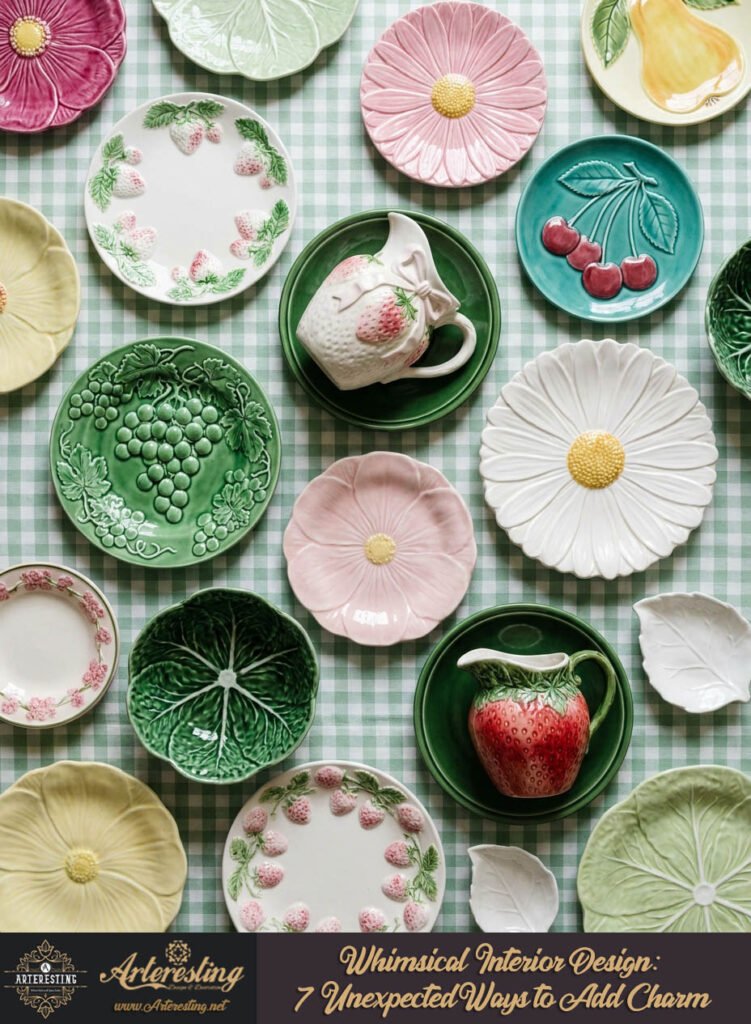
Hanging sculptural majolica plates transforms rigid dining spaces through playful, food-centric motifs. Consequently, these three-dimensional ceramics effectively break up flat wall planes and introduce organic texture, replacing predictable fine china displays with highly structural, character-filled focal points that capture light beautifully.
Visually, traditional fine china often feels static. Majolica, conversely, commands spatial attention through deep glazing and figural silhouettes. Cabbageware provides a highly textured counterpoint when mixed into these arrangements. Crucially, the light interacts with the raised ceramic details, casting micro-shadows that shift throughout the day. Therefore, arranging these pieces in asymmetrical clusters modernizes the formal dining room. Homeowners can secure these plates using invisible adhesive discs to maintain a floating, architectural aesthetic. Ultimately, this approach exemplifies charming home decor without creating surface clutter.
Character-Filled Interiors: Soften the Laundry Room with Skirting
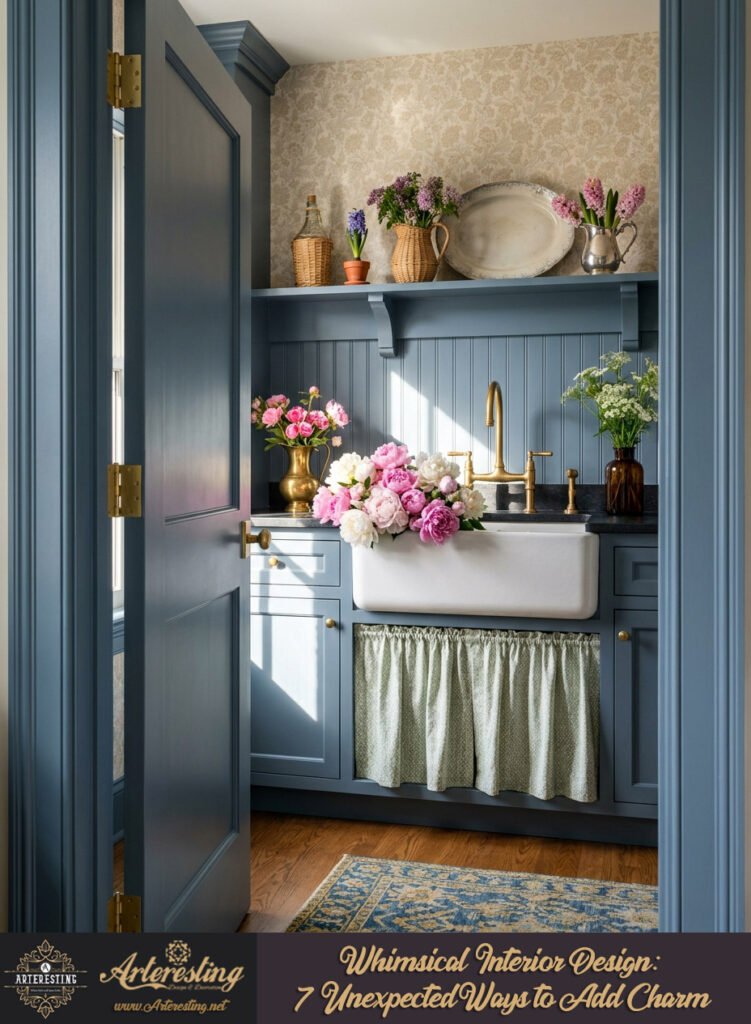
Implementing fabric skirts under laundry room sinks softens the harsh, utilitarian architecture of utility spaces. Specifically, utilizing high-end performance textiles conceals appliances and plumbing while introducing necessary movement, color, and tactile warmth into an otherwise sterile environment.
Utilitarian zones rarely receive stylistic priority. Nevertheless, introducing soft drapery beneath counters alters the acoustic and visual temperature of the room. Furthermore, pleated fabrics create structural rhythm against rigid cabinetry. The key lies in material selection. Specifically, performance textiles resist moisture and staining, ensuring the intervention remains highly functional. Consequently, sourcing distinct, designer-grade prints from direct-to-consumer platforms immediately injects personality into the daily wash routine. Ultimately, this textile application grounds the room, bridging the gap between rigorous utility and whimsical interior design.
Install Utility Basket Rails in the Kitchen
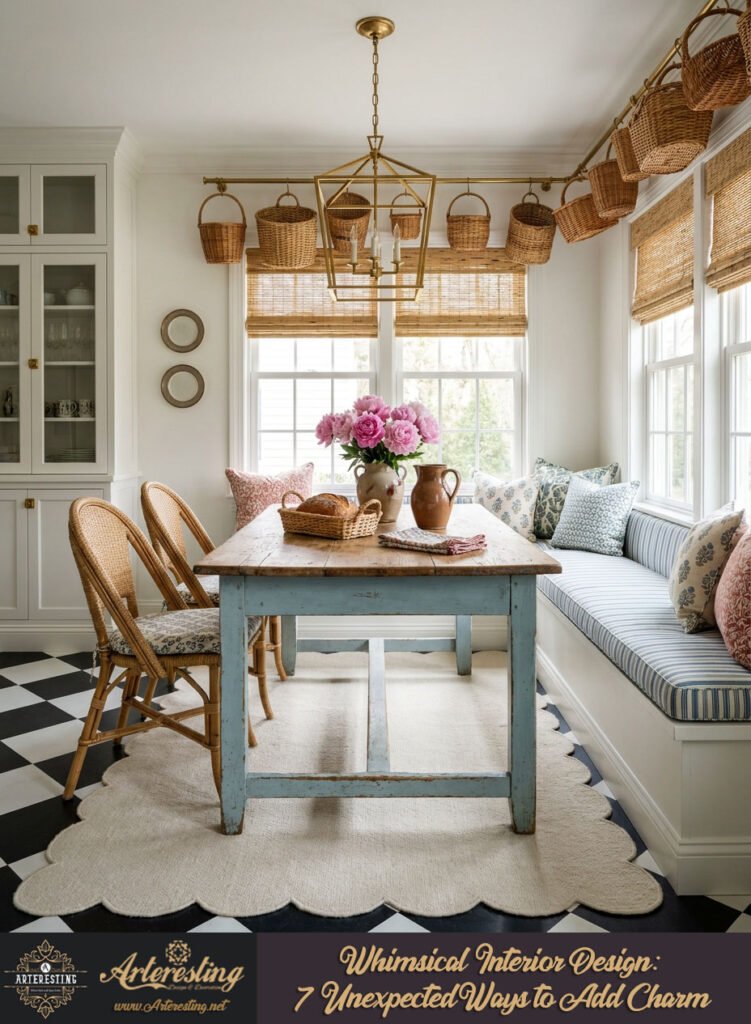
A suspended basket rail integrates rustic charm and vertical storage into modern cottage kitchens. By hanging woven textures above work zones, designers create functional displays that capture old-world sensibilities while keeping fresh herbs and market supplies immediately accessible.
Contemporary kitchens often suffer from an excess of smooth, hard surfaces. Therefore, introducing a brass or iron rail system establishes a distinct architectural datum line. Hanging woven baskets along this axis breaks up the monotony of sleek backsplashes. Visually, the natural fibers introduce organic warmth and varied geometry. Functionally, this setup serves as active storage for daily harvesting. Specifically, positioning the rail near prep zones ensures optimal utility. Consequently, this highly tactical strategy seamlessly balances visual nostalgia with rigorous modern functionality.
Transform Circulation Zones with Painted Floor Runners
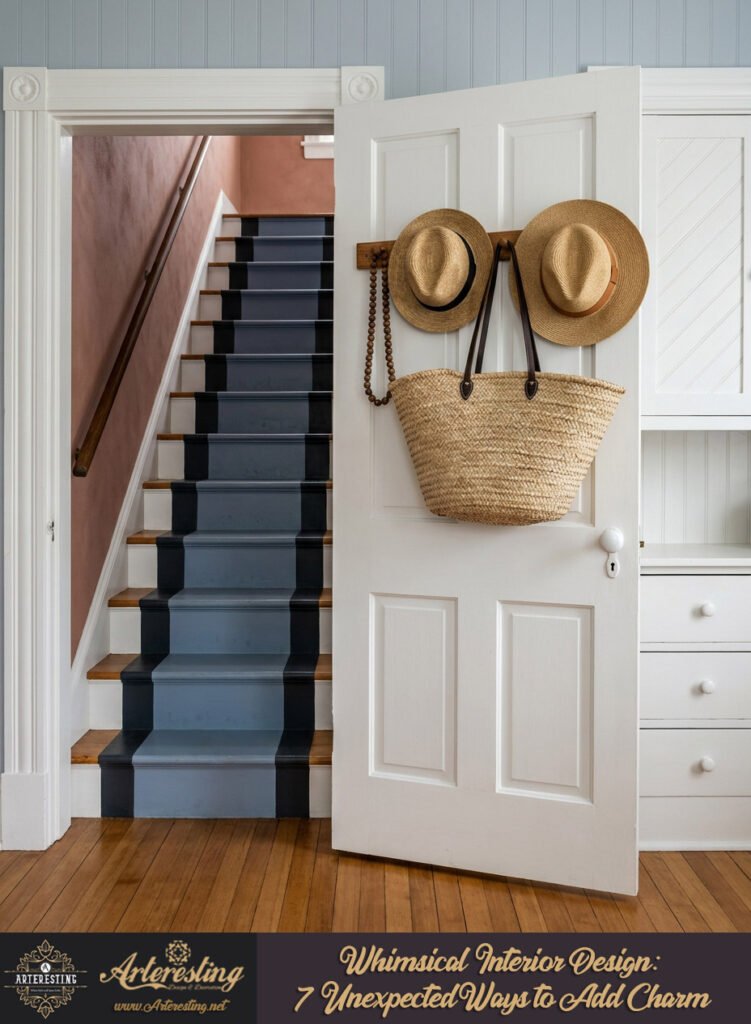
Painting a dedicated stair or floor runner directly onto timber boards delivers immense visual impact for minimal expenditure. Specifically, this bold geometric intervention aggressively directs traffic flow while adding a surprising, permanent layer of color to transitional and overlooked circulation spaces.
Corridors and stairwells typically serve as mere passageways. However, applying a painted runner instantly activates these overlooked zones. Crucially, a painted runner alters spatial perception, drawing the eye upward and emphasizing structural depth. Furthermore, selecting high-contrast, durable floor enamels ensures longevity against daily foot traffic. This method demands rigorous taping and precise execution to maintain crisp, architectural lines. Ultimately, this approach turns a side porch or back staircase into a deliberate, highly considered design moment.
Playful Spatial Styling: Repurpose Textiles for Office Upholstery
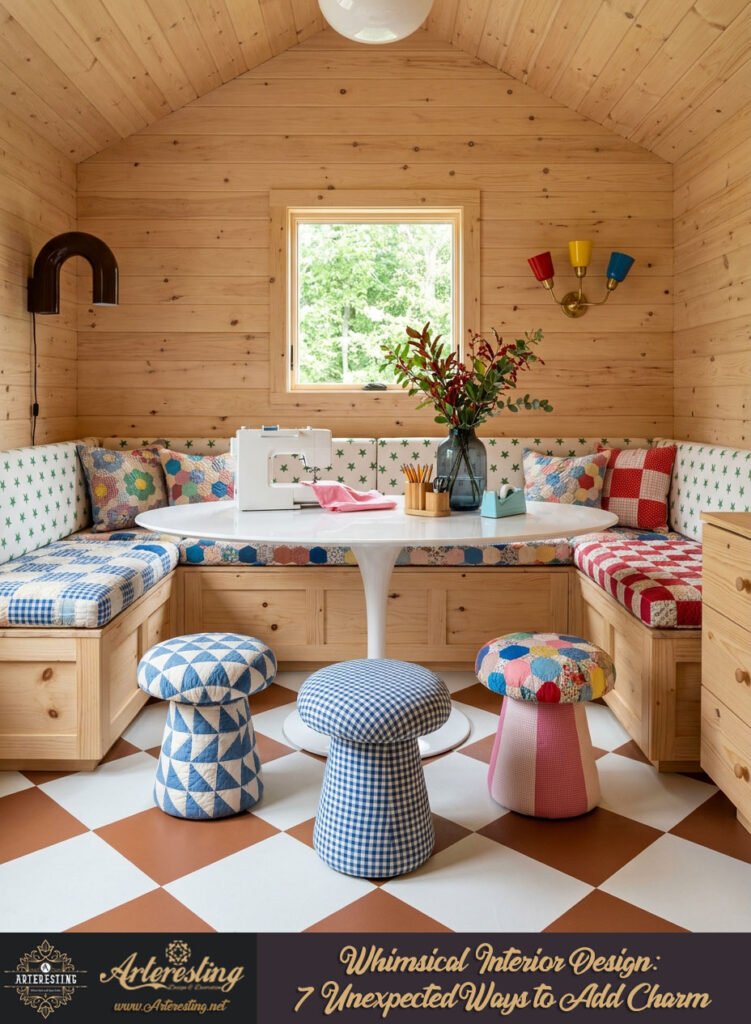
Upholstering office chairs with repurposed vintage textiles introduces unique, narrative-driven texture to corporate settings. By utilizing cutter quilts or embroidered yardage, designers transform standard ergonomic furniture into singular, tactile statements that soften rigorous workspaces.
Home offices frequently lean toward sterile professionalism. Conversely, wrapping functional seating in historical textiles injects immediate charm. Specifically, cutter quilts provide dense, tactile padding and varied geometric patterns. Visually, these fabrics disrupt the cold dominance of monitors and metallic hardware. Furthermore, sourcing heavy-duty, tightly woven tapestries ensures the seat withstands daily friction. Therefore, this customized upholstery strategy roots the workspace in artisanal history. This tactile layer actively reduces the visual anxiety often associated with task-oriented environments. Thus, playful spatial styling thrives in unexpected commercial zones.
Master Whimsical Interior Design with Candy-Colored Bathroom Fixtures
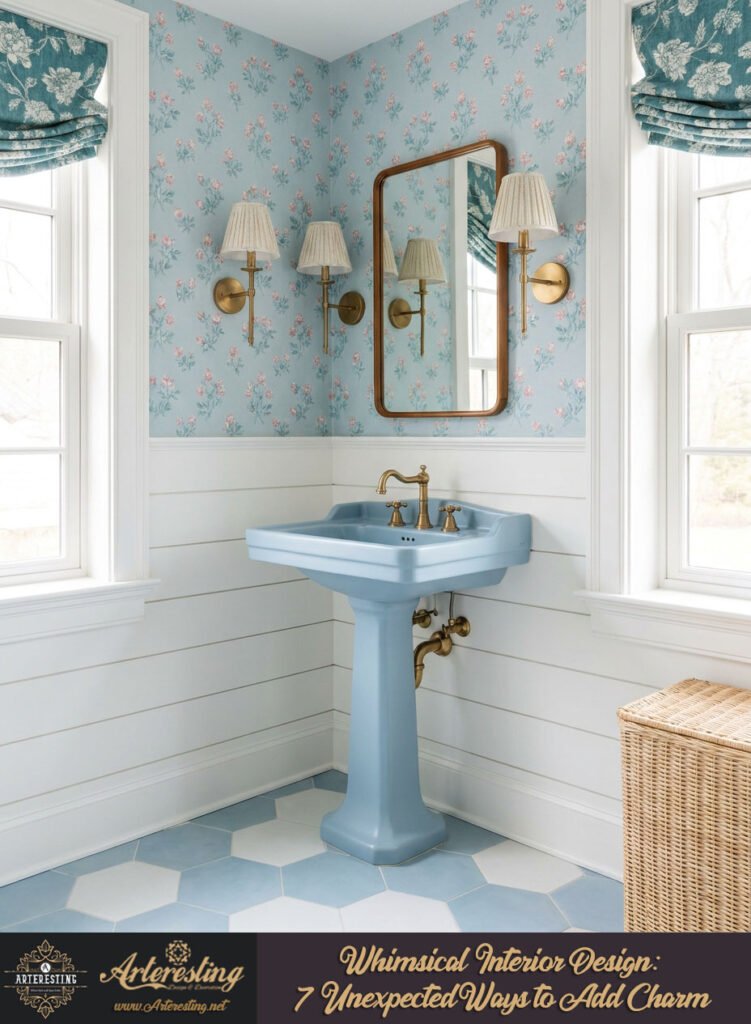
Replacing standard white sanitaryware with candy-colored tubs and sinks injects immediate, structural personality into otherwise sterile bathrooms. Consequently, these vibrant fixtures serve as primary visual focal points, entirely shifting the room’s atmosphere without requiring complex or expensive structural tile renovations.
Powder rooms naturally accommodate bold experimentation. Historically, sanitaryware remained strictly white and utilitarian. However, integrating pastel or saturated fixtures challenges this convention. Visually, a colored sink or toilet grounds the space and dictates the surrounding palette. Furthermore, specialized manufacturers currently produce highly durable, pigmented ceramics that resist fading. Crucially, pairing these vibrant elements with subtle, matte brassware prevents visual overwhelming. Ultimately, mastering this execution in wet rooms requires a precise balance between high-impact color and architectural restraint.
Upgrade Ancillary Structures with Bold Color and Vinyl Wallpaper
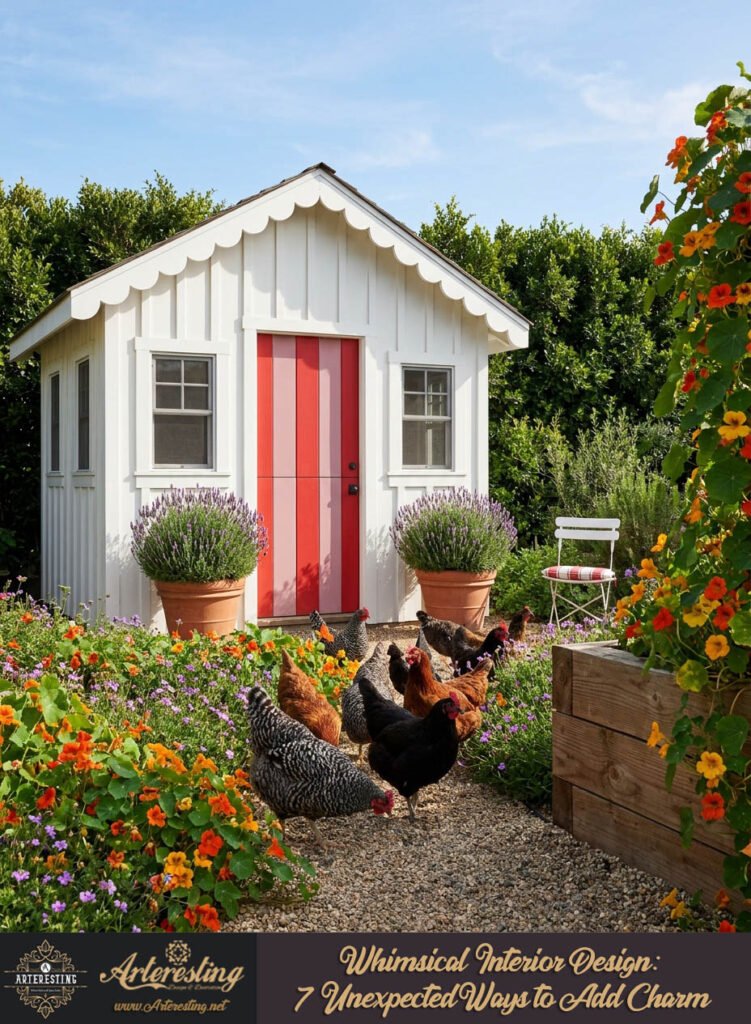
Applying high-contrast paint and themed vinyl wallpaper to outdoor structures extends the home’s design narrative outward. Specifically, matching painted exterior trim with easily washable interior wall coverings bridges the gap between agricultural utility and refined spatial styling.
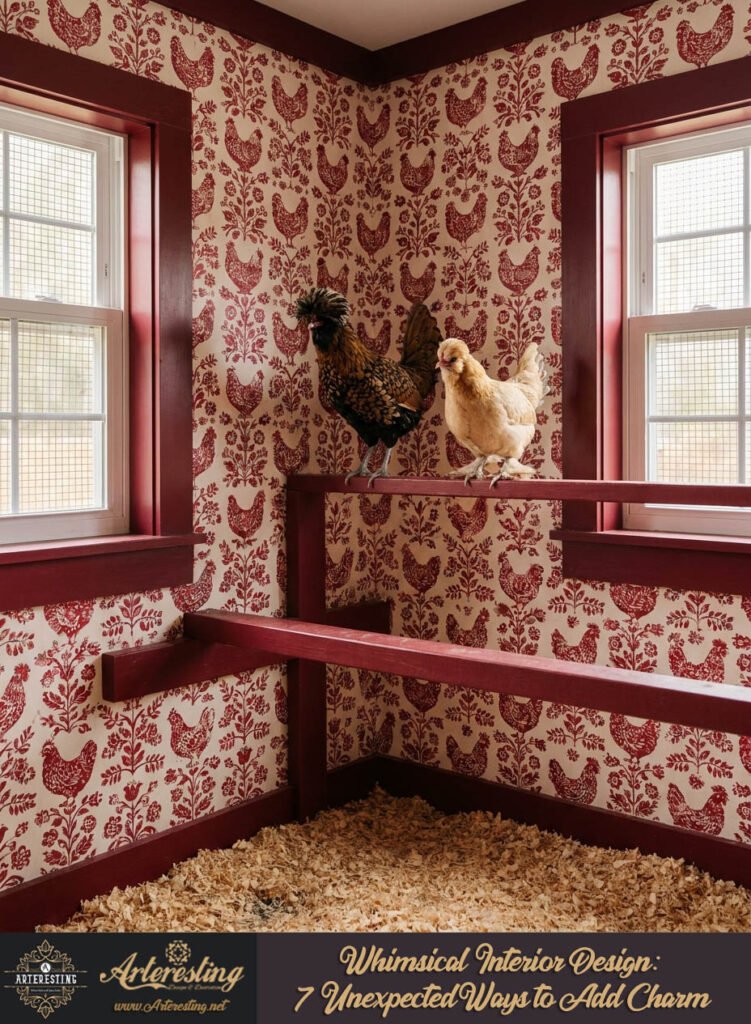
Outbuildings typically suffer from profound design neglect. Nevertheless, treating a chicken coop with the same rigorous aesthetic standards as a main residence yields striking results. Specifically, applying a high-gloss, saturated hue to the door instantly defines the structure. Inside, applying a heavy-duty, themed vinyl wallcovering introduces an unexpected layer of refinement. Crucially, vinyl provides a necessary wipeable surface for agricultural hygiene. Furthermore, adding traditional architectural details reinforces the structural charm. Therefore, this comprehensive approach proves that sophisticated execution belongs everywhere.
Architectural spaces demand both rigor and personality. Consequently, introducing character through these specific, highly tactile interventions completely alters a home’s emotional resonance. Cultivating a dynamic environment requires moving beyond flat, predictable finishes. Ultimately, embracing whimsical interior design provides the perfect framework for creating spaces that are structurally sound, visually engaging, and profoundly unique.
Whimsical interior design integrates playful, character-driven elements into traditional architectural spaces. Key methods include styling sculptural majolica plates in dining rooms, adding performance fabric skirts to laundry areas, and installing candy-colored fixtures in bathrooms. These localized interventions add charm without compromising the broader structural integrity of the home.
The post Whimsical Interior Design: 7 Unexpected Ways to Add Charm appeared first on Arteresting.


Comments
Post a Comment