Outdated Living Room Trends 2026: What Designers Are Cutting
Summer provides a natural transition point to critically evaluate your spatial layout. Identifying the outdated living room trends 2026 will leave behind is just as vital as sourcing new materials. Therefore, understanding structural aesthetics prevents costly missteps.
Retiring Wavy Decor and Scalloped Micro-Trends
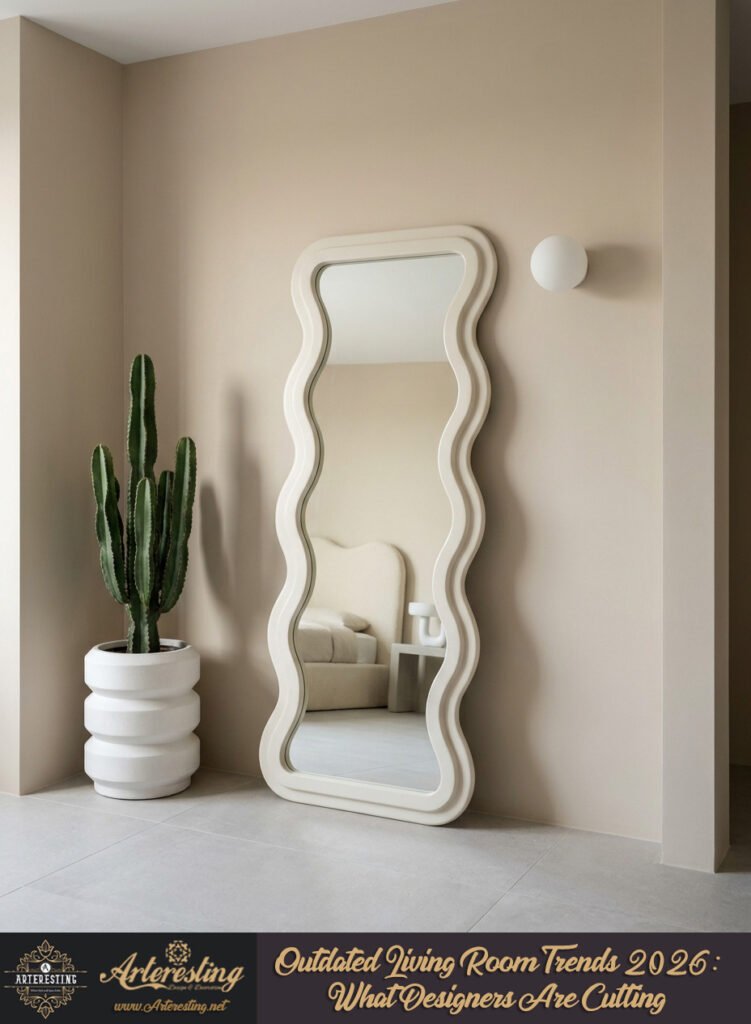
Wavy and scalloped furniture represents a fleeting micro-trend that rapidly dates a spatial environment. Consequently, designers are abandoning these exaggerated forms in favor of classic silhouettes. Adopting straight lines and gradual curves guarantees longevity and preserves architectural integrity.
Specifically, visual algorithms heavily promoted undulating sofas throughout the early 2020s. However, these hyper-specific shapes lack structural permanence. Visually, they disrupt the natural geometry of a refined room. Instead of anchoring a space, they create visual noise. Furthermore, heavily stylized micro-trends expire quickly.
If you appreciate curvature, you must apply it selectively. For instance, a single accent chair with a gentle slope offers visual relief. Conversely, saturating a room with wavy edges degrades overall sophistication. Therefore, prioritize investment pieces with tailored profiles.
Why Oversized Cloud Sofas Are Outdated Living Room Trends 2026
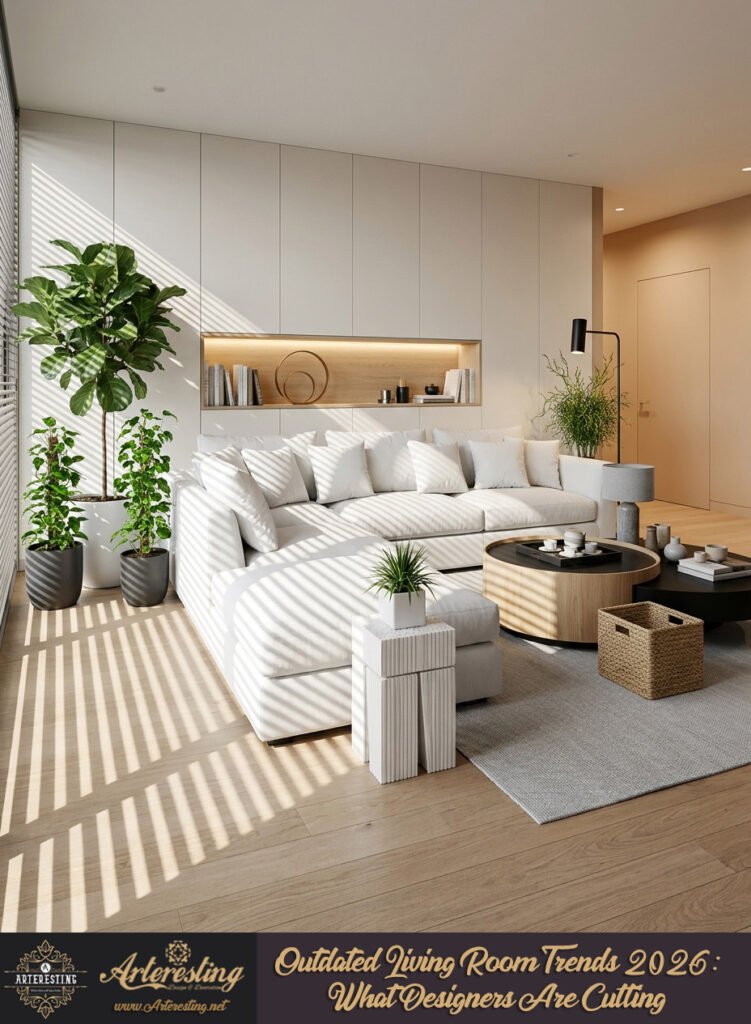
Oversized, unconstructed cloud sectionals dominate floor plans and sacrifice spatial proportion for perceived comfort. Consequently, these massive forms appear visually heavy and architecturally unresolved. Refined living spaces require seating that balances ergonomic support with distinct, tailored boundaries.
Previously, sprawling white sectionals dominated editorial feeds. Unfortunately, they overpower standard dimensions. Specifically, the lack of a rigid frame makes the room look undeniably sloppy. Furthermore, prioritizing sheer mass over tailored structure ruins spatial flow. Consequently, your layout becomes functionally restrictive.
To maintain visual lightness, you must replace monolithic sectionals with balanced proportions. For example, pairing a structured love seat with sculptural lounge chairs opens the floor plan. Ultimately, this arrangement encourages conversational flow while maintaining a sophisticated footprint.
Shifting Away From Flat White and Beige Color Palettes
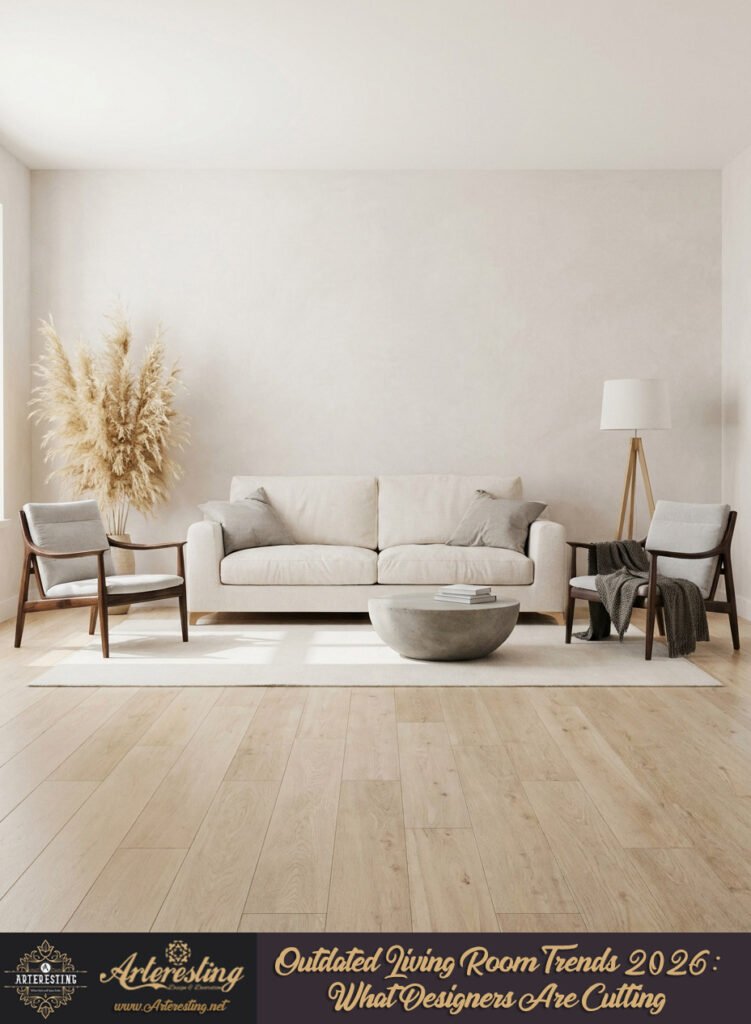
Tone-on-tone white and beige rooms lack the necessary contrast to create spatial depth. Therefore, designers are rejecting flat, monochromatic neutrality. Instead, sophisticated interiors rely on rich, earthy pigments paired with tactile materials to establish a grounded, human-centric atmosphere.
Monolithic tonal rooms often read as sterile. Specifically, without distinct shadow lines or color variance, a room flattens completely. Furthermore, relying entirely on bleached tones strips a space of its intrinsic character. Therefore, layered contrast is essential.
You do not need to abandon neutrals entirely. Instead, you must anchor soft beige walls with broad, saturated accents. For instance, introducing chocolate brown, olive green, or oxidized clay instantly grounds the visual field. Crucially, applying these colors through light-absorbing textiles maximizes their depth.
Moving Past Ultra-Minimalism in Structural Styling
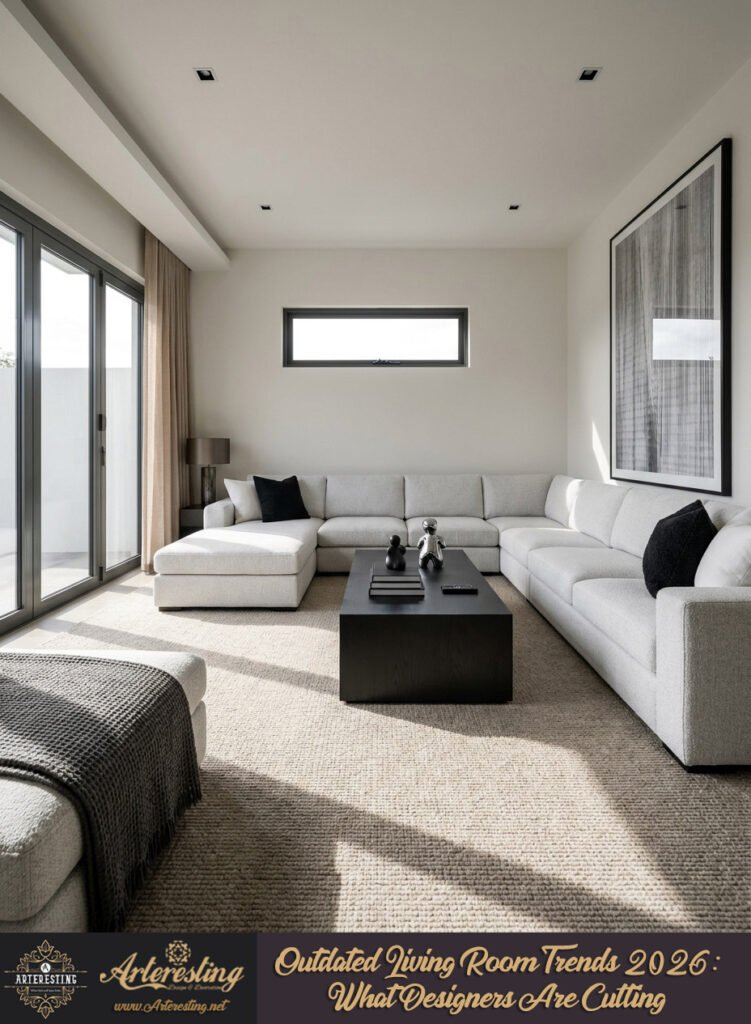
Strict ultra-minimalism creates severe, inhospitable environments devoid of personal narrative. Consequently, rigid showrooms fail to meet the psychological need for comfort. Modern design requires the intentional integration of traditional details and curved silhouettes to soften severe modernist architecture.
Streamlined furnishings undoubtedly provide excellent foundational geometry. However, deploying them exclusively yields a harsh, clinical environment. Furthermore, empty surfaces do not automatically equal sophisticated design. Instead, successful spatial styling relies on friction between different eras and forms.
To correct sterility, you must introduce textural friction. For example, pairing a rigid steel coffee table with a deeply tufted, traditional sofa creates immediate visual interest. Ultimately, blending clean lines with historic shapes elevates the spatial psychology of the room.
The End of Matching Furniture Sets and Obsolete Living Room Decor
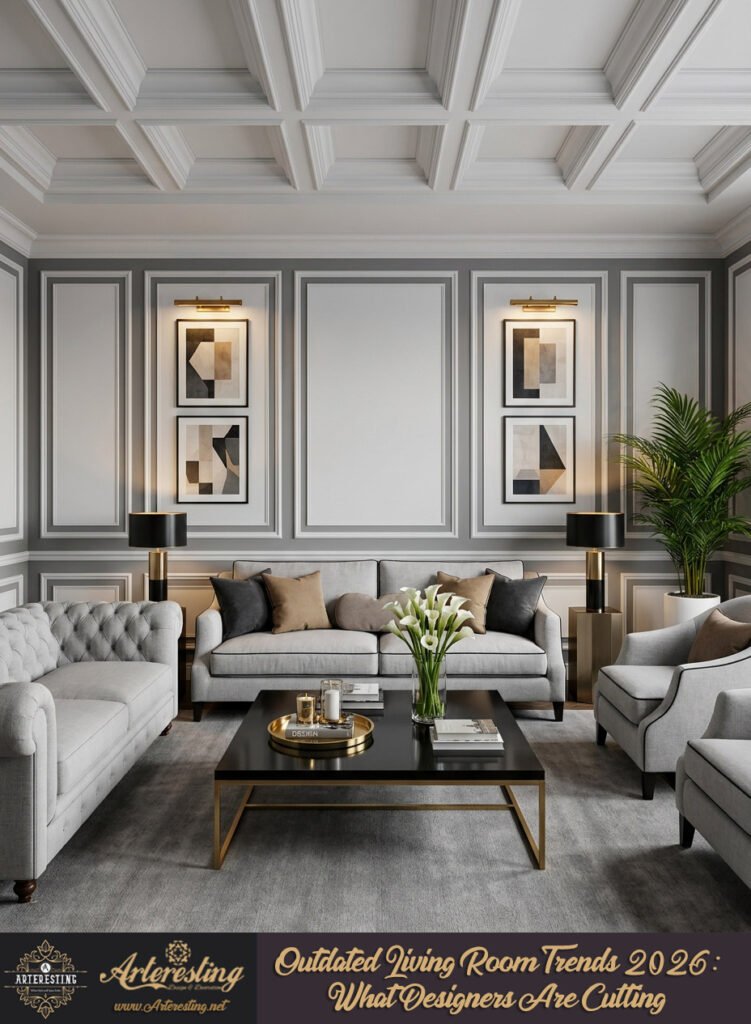
Purchasing comprehensive, matching furniture suites instantly dates a room and eliminates individual expression. Therefore, designers strictly avoid these catalog-copied arrangements. High-end spatial styling demands eclectic layering, blending disparate materials, and bridging vintage heritage with contemporary precision.
Matching sets effectively transform a primary living space into a generic staging concept. Specifically, rigid uniformity lacks the curated tension that defines luxury interiors. Furthermore, identical wood tones and matching upholstery fabrics visually suffocate the environment.
You must break up existing sets immediately. Firstly, separate matching armchairs from their parent sofa. Subsequently, introduce contrasting materials like patinated metals or honed stone. Ultimately, eclectic layering requires a deliberate mix of vintage patinas and crisp contemporary lines.
Eliminating Non-Functional Design in Outdated Living Room Trends 2026
Prioritizing pure aesthetics over daily utility results in beautiful but ultimately unlivable spaces. Consequently, designers are discarding any trend that restricts human movement or comfort. True luxury demands that materials and layouts actively support the practical rituals of daily life.
A beautifully styled room fails if you cannot comfortably inhabit it. Specifically, fragile fabrics and awkwardly placed sculptural seating disrupt daily routines. Furthermore, treating a gathering space like a museum actively repels connection. Therefore, functionality must dictate your spatial planning.
Every design decision must serve a practical purpose. For instance, ensure traffic paths remain entirely unobstructed. Additionally, select high-performance textiles that withstand actual usage. Ultimately, the outdated living room trends 2026 successfully eliminates are those that ignore the human element.
Evaluating your space through this critical lens guarantees lasting architectural integrity. By avoiding the outdated living room trends, 2026 is shifting away from, you establish a resilient foundation. Ultimately, strategic material choices and structural styling will keep your environment sophisticated for decades.
The outdated living room trends 2026 will include wavy micro-trend furniture, oversized cloud sectionals, and flat white-and-beige palettes. Designers emphasize a shift toward structured silhouettes, rich earthy contrasts, and eclectic layering. Future-proof living spaces prioritize functional architecture over hyper-minimalist staging.
The post Outdated Living Room Trends 2026: What Designers Are Cutting appeared first on Arteresting.


Comments
Post a Comment