Dark vs Light Kitchens: An Architectural Guide to Cabinet Color
Navigating the Architectural Choice: Dark vs Light Kitchens
Comparing dark vs light kitchens requires analyzing your daily spatial habits, natural light exposure, and desired psychological atmosphere. Therefore, the most enduring interior schemes prioritize personal resonance over temporary trends. Ultimately, your choice dictates the fundamental structural aesthetics of your home.
When evaluating dark vs light kitchens, homeowners face a critical architectural decision. Your final palette dictates the entire spatial flow. Furthermore, this foundational room operates as the hardest-working zone within the house.
Consequently, selecting an enduring palette ensures longevity. Crucially, your layout must align with how you authentically live. Therefore, personal spatial psychology trumps passing commercial trends.
Prioritizing Structural Authenticity
Visually, successful architecture demands a cohesive material language. Specifically, your chosen finish must interact harmoniously with existing sightlines. Ultimately, prioritizing authentic daily usage guarantees a successful structural transformation.
Light Kitchen Pros: Spatial Proportion and Illumination
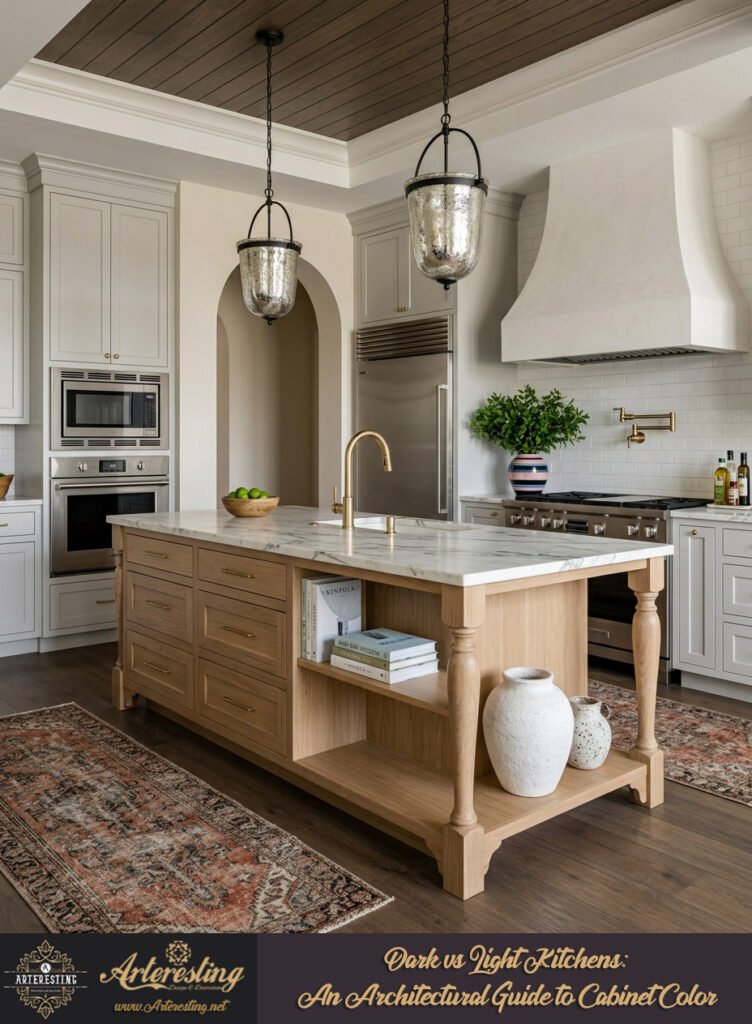
Light cabinetry maximizes spatial proportion by amplifying available natural illumination. Consequently, pale finishes create an expansive, highly adaptable visual footprint. Specifically, these crisp surfaces offer a versatile structural baseline that effortlessly transitions alongside evolving interior styling preferences over time.
Bright palettes consistently deliver a versatile, structural baseline. Visually, crisp white finishes or pale timber tones stretch spatial boundaries. Therefore, lighter surfaces actively make a room feel larger and fresher.
Furthermore, these airy environments foster highly sociable atmospheres. Crucially, pale lacquers rarely fall out of architectural favor.
Maximizing Natural Light
Specifically, pale cabinetry bounces sunlight deep into the floor plan. Furthermore, warm neutrals establish a highly flexible backdrop. Consequently, this adaptability spans both contemporary minimalist and traditional architectural frameworks. Ultimately, this inherent flexibility grants pale layouts significant commercial longevity.
Light Kitchen Cons: The Risk of Visual Flatness
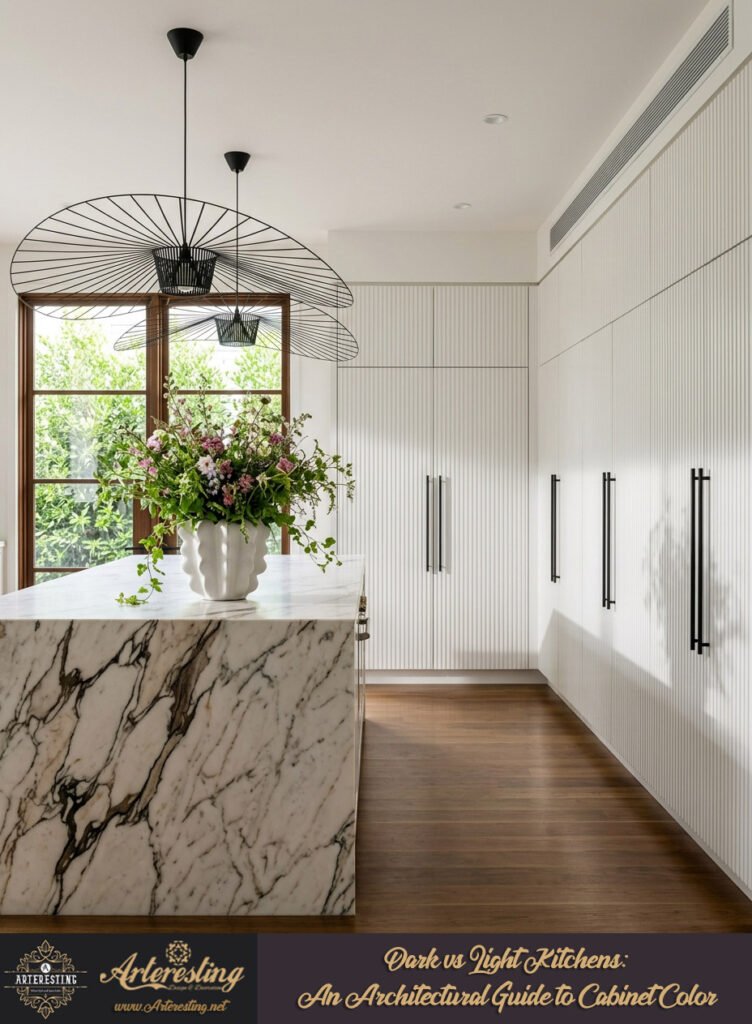
Without rigorous tactile integration, pale cabinetry risks feeling visually flat or uninspired. Furthermore, high-reflectance surfaces require continuous maintenance, as they immediately highlight daily wear, smudges, and abrasions. Ultimately, an overly sanitized palette can lack necessary architectural friction.
Predictability remains the primary drawback of pale finishes. Crucially, lacking tactile contrast renders these environments overly sterile. Visually, environments without material friction fail to engage the eye.
Therefore, integrating organic textures prevents the room from feeling thoroughly uninspired. Furthermore, heavily saturated accents provide necessary structural grounding.
Maintenance and Material Wear
Specifically, lighter surfaces aggressively highlight structural wear and tear. Furthermore, daily friction marks appear almost immediately on pale lacquers. However, styling with layered materials injects necessary personality. Ultimately, mastering dark vs light kitchens requires balancing cleanliness with practical daily reality.
Dark Kitchen Pros: Architectural Depth and Intimacy
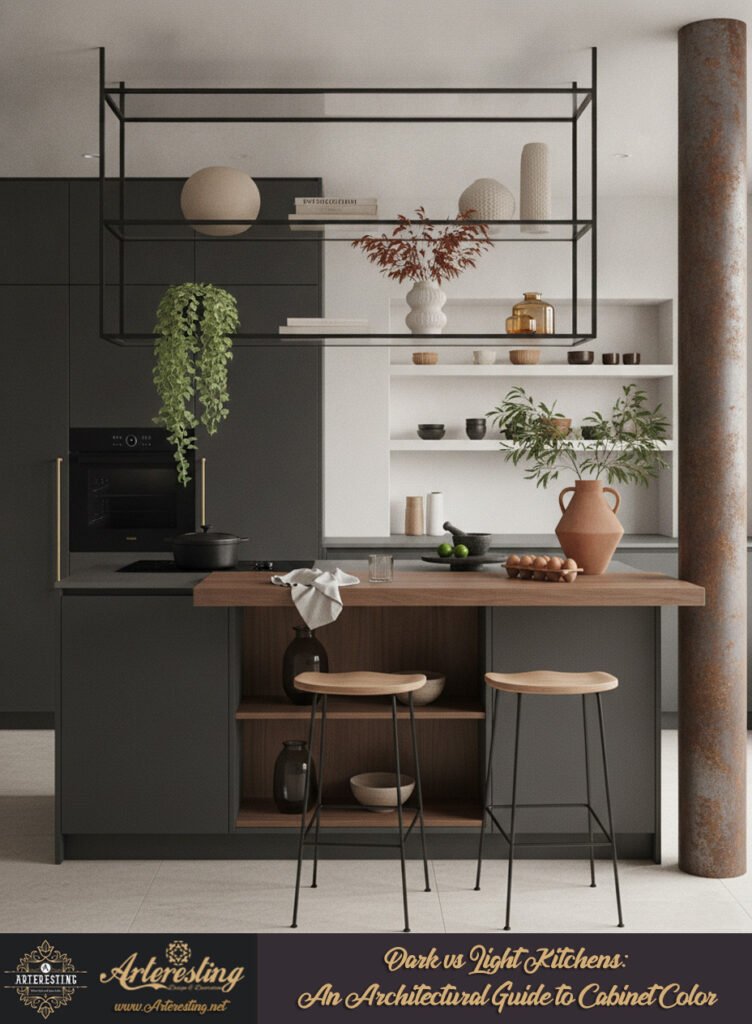
Deep palettes establish immediate architectural depth and sophisticated visual weight. Specifically, moody finishes craft a cocooning psychological atmosphere that grounds expansive floor plans. Conversely, in compact footprints, deep tones generate intentional intimacy rather than restrictive enclosure.
Moody palettes inject profound richness into any structural envelope. Visually, deep tones anchor a room securely to its foundation. Therefore, a saturated palette feels instantly sophisticated and highly intentional.
Crucially, these finishes command immediate attention upon entry. Furthermore, moody lacquers introduce an inviting, tactile cocooning effect.
Spatial Grounding Strategies
Interestingly, assessing dark vs light kitchens reveals a spatial paradox. Specifically, deep hues excel within restricted footprints. Furthermore, pairing deep lacquers with reflective stone worktops mitigates visual heaviness. Consequently, deeply saturated cabinetry successfully grounds expansive open-plan layouts with undeniable authority.
Dark Kitchen Cons: Lighting Reliance and Wear
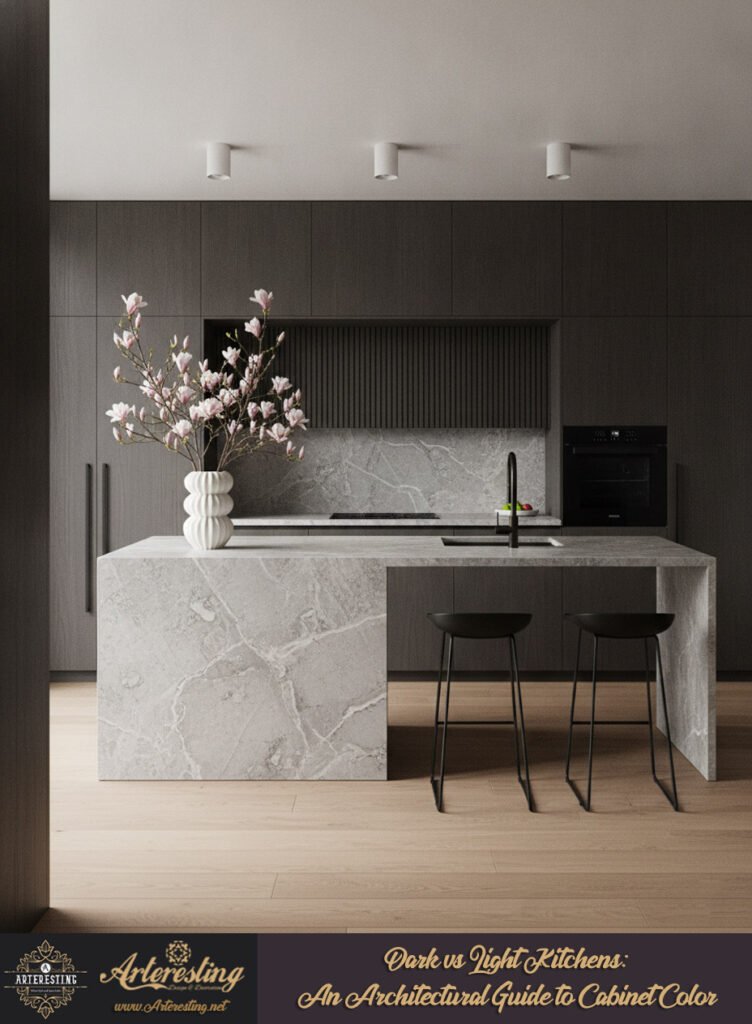
Saturated cabinetry demands rigorous, multi-layered ambient and task lighting to prevent the space from feeling enclosed. Furthermore, shifting interior trends can prematurely date hyper-specific moody palettes. Crucially, deep lacquers show structural abrasions, scratches, and dust far more aggressively than pale alternatives.
Relying on transient design cycles introduces significant long-term risk. Crucially, deeply saturated hues demand precise, multi-layered lighting plans. Without adequate illumination, compact footprints quickly feel oppressive.
Therefore, homeowners must execute a flawless balance of tasks and ambient fixtures. Visually, unsupported moody palettes swallow necessary architectural light.
The Reality of Abrasions
Visually, deep cabinetry highlights chips and scratches relentlessly. Furthermore, maintaining long-term visual integrity proves challenging with heavy daily use. Consequently, practical maintenance must inform your final material selection. Ultimately, ignoring daily wear degrades the initial structural intention.
The Final Verdict on Choosing a Kitchen Color
Deciding on your ultimate cabinetry palette hinges on architectural harmony rather than fleeting popular consensus. Specifically, successful environments integrate seamlessly with existing light patterns and structural boundaries. Ultimately, your selected finish must authentically support your daily functional routines.
The most triumphant spaces remain fiercely authentic to their inhabitants. Visually, proper integration with structural light pathways dictates success. Therefore, homeowners should ignore shifting commercial consensus.
Instead, prioritize daily psychological comfort and functional practicality. Crucially, your selected finish must serve your specific behavioral habits.
Aligning with Architecture
Crucially, enduring design respects the existing structural envelope. Furthermore, balancing proportions ensures long-term satisfaction. Ultimately, mastering dark vs light kitchens means selecting the palette that feels intrinsically correct from the moment you cross the threshold.
When comparing dark vs light kitchens, the decision hinges on natural light exposure, room dimensions, and maintenance tolerance. Light kitchens reflect illumination to maximize spatial proportion and offer timeless versatility. Conversely, dark kitchens absorb light to establish architectural depth, creating an intimate, grounding atmosphere that requires strategic ambient lighting.
The post Dark vs Light Kitchens: An Architectural Guide to Cabinet Color appeared first on Arteresting.


Comments
Post a Comment