Bohemian Living Room Design: 13 Rules for Elevated Spaces
Achieving a refined bohemian living room design requires structural precision. Specifically, mastering this aesthetic demands an understanding of spatial flow, tactile layering, and lighting behavior. Ultimately, a successful execution balances global influences with grounded architectural elements. Therefore, we outline thirteen definitive rules for cultivating an elevated, highly personal interior.
1. Highlight Natural Wood Architectural Details
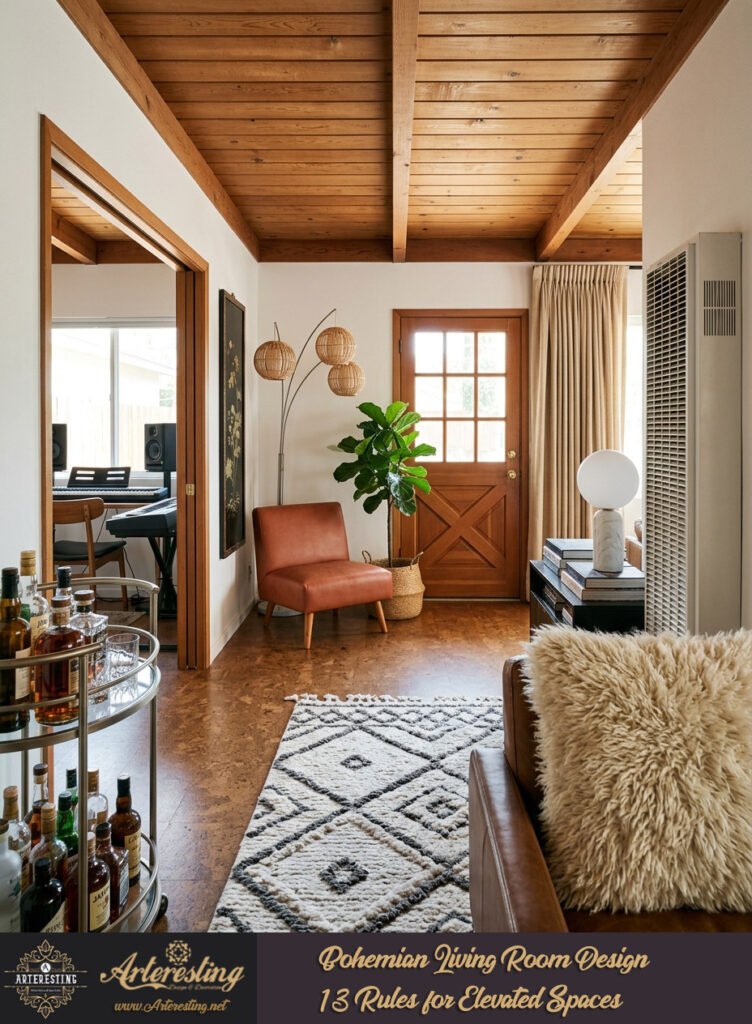
Preserving natural wood millwork establishes an earthy, grounding baseline for bohemian interiors. Specifically, unpainted timber adds organic warmth and structural integrity, effectively anchoring lighter textiles and eclectic decor elements.
Crucially, raw wood interacts dynamically with natural light. The grain variations add subtle visual texture without overwhelming the space. Thus, resist the urge to paint vintage beams or trim. Instead, oil the wood to enhance its innate patina.
2. Anchor the Space with Leather Furniture
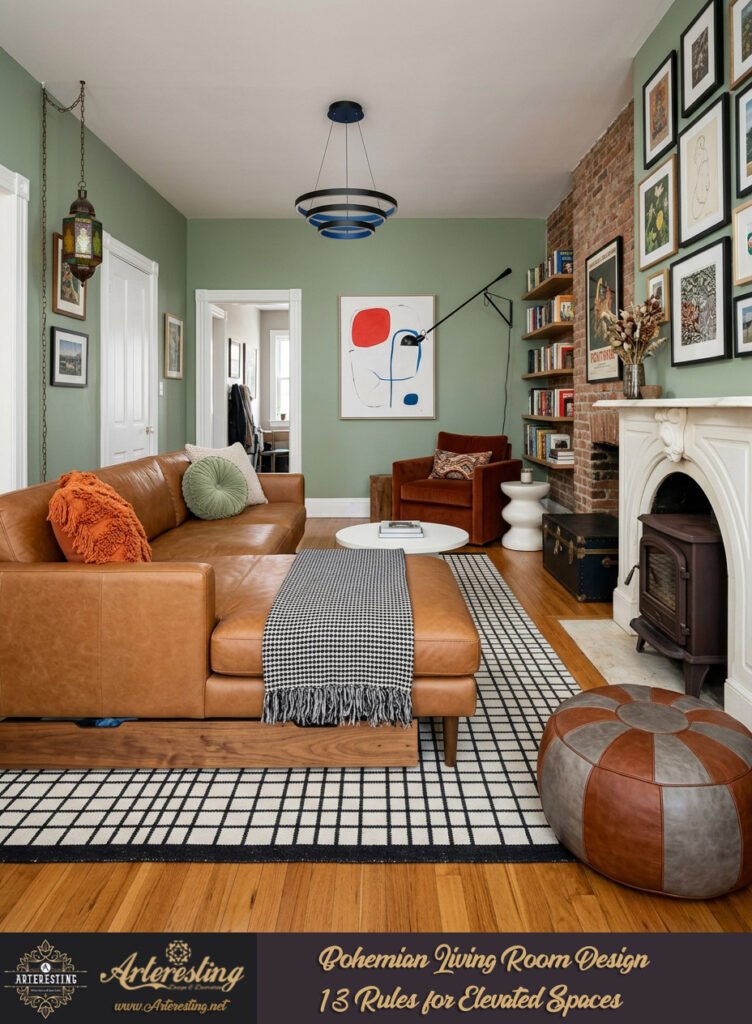
Genuine leather upholstery provides essential visual weight in a bohemian living room design. Furthermore, this tactile material introduces a masculine counterpoint to soft, fringed textiles, ensuring spatial balance.
Leather absorbs and reflects ambient light uniquely throughout the day. Consequently, a low-slung leather sofa grounds the room’s sightlines. Visually, this encourages a relaxed posture. Source vintage seating with visible wear for authentic character.
Foundational Material Hierarchy
| Material Profile | Spatial Function | Visual Impact |
| Raw Timber | Structural Anchoring | Warm, Organic |
| Worn Leather | Visual Weighting | Tactile, Grounded |
| Woven Rattan | Textural Diffusion | Light, Breathable |
3. Establish a Light, Airy, and Bright Atmosphere
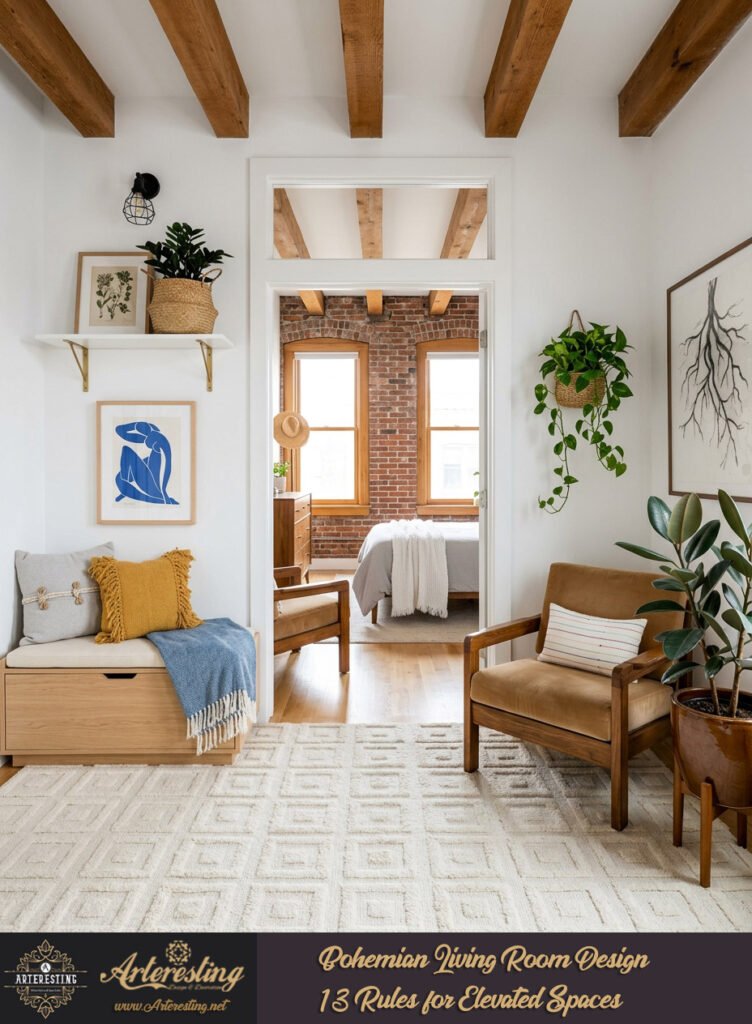
Muted palettes maximize spatial volume and light distribution. Specifically, white walls and light wood tones create a blank canvas, allowing textured accessories to dictate the room’s personality.
Indeed, prioritizing brightness prevents layered spaces from feeling oppressive. Sunlight bounces freely off pale surfaces. Therefore, inject interest through exposed brick or velvet upholstery rather than saturated wall paint. This maintains critical visual breathability.
4. Curate an Evolving Gallery Wall
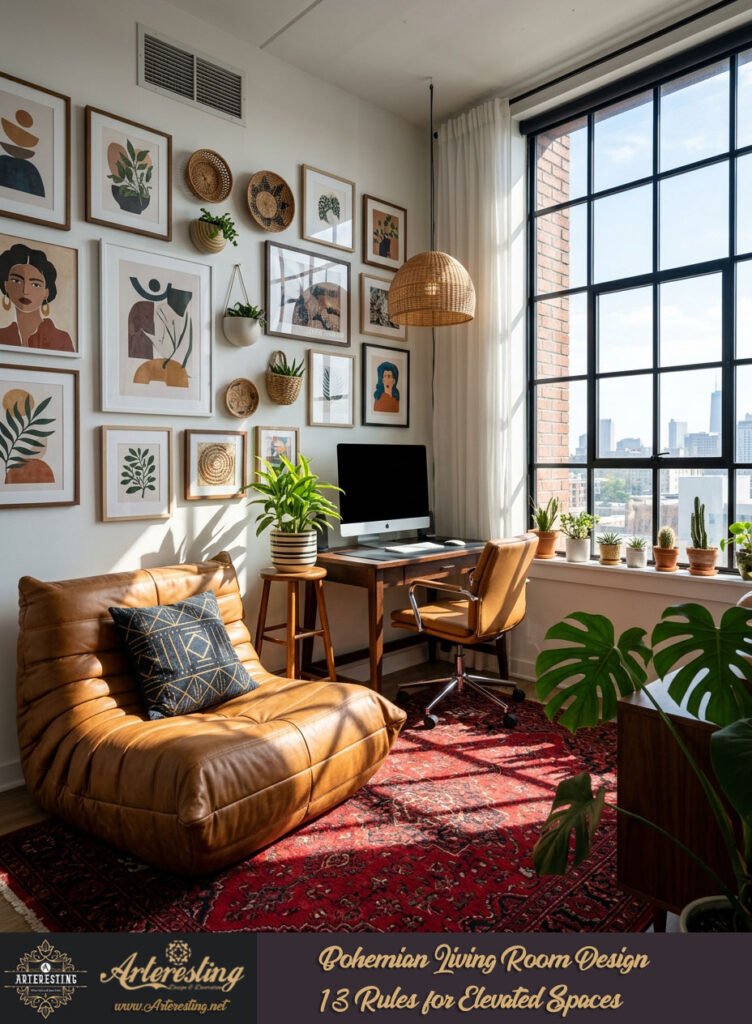
Gallery walls inject narrative depth into vertical planes. Visually, mixing personal photography, modern art, and botanical elements breaks rigid architectural lines, fulfilling the mandate for deep personalization.
Symmetrical displays often feel too formal. Conversely, an organic arrangement draws the eye upward, increasing the perceived ceiling height. Use mismatched frames purposefully. Consequently, the collection feels gathered over decades.
5. Lean into Maximalist Spatial Layering
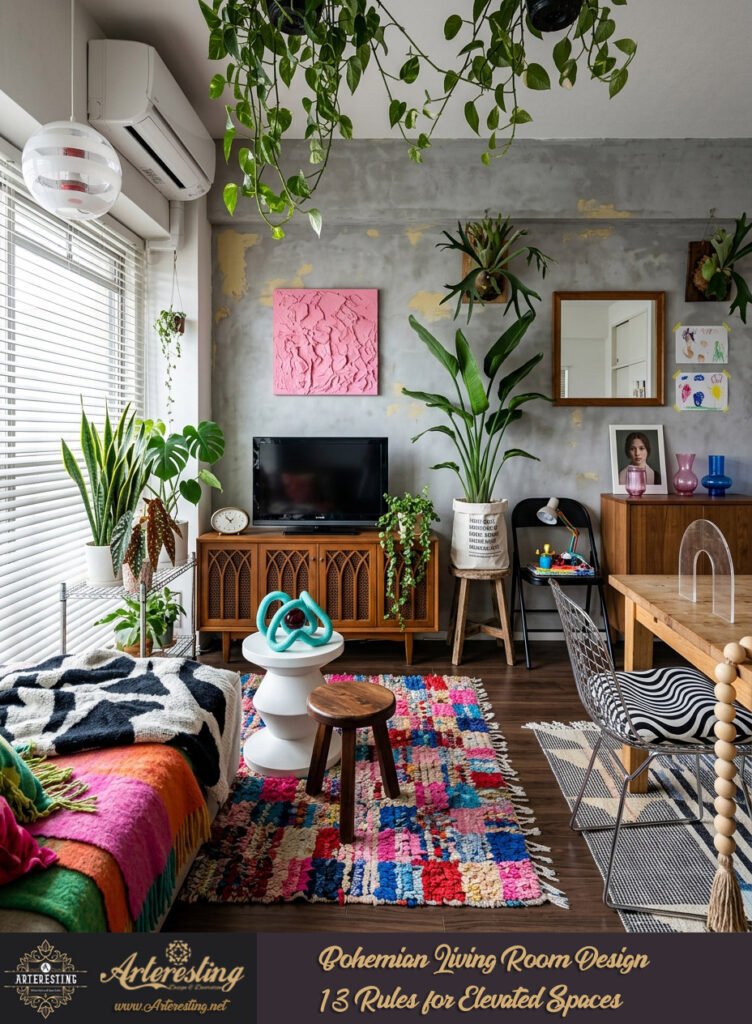
Controlled maximalism bridges the gap between chaotic clutter and curated abundance. Specifically, overlapping vibrant patterns and eclectic artwork generate high-energy visual friction that remains intentionally cohesive.
Layering demands a strict underlying geometry. Group objects by color family to prevent sensory overload. Furthermore, anchor disparate patterns with a single unifying hue. Thus, the eye moves smoothly across densely packed vignettes.
6. Celebrate Retro and Nostalgic Silhouettes
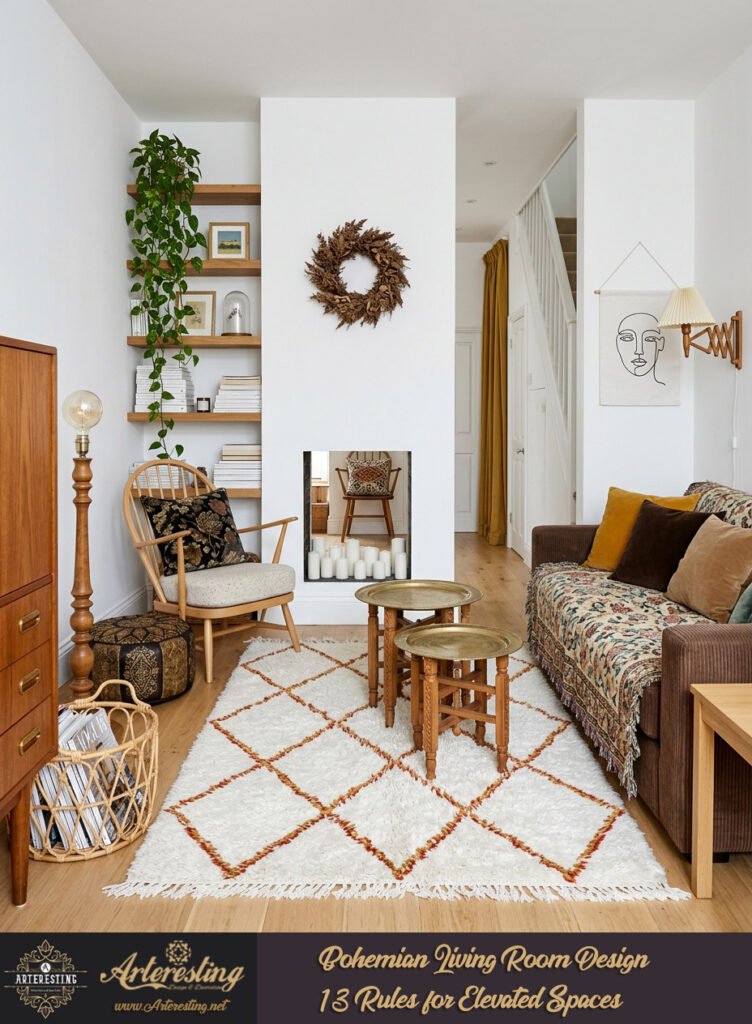
Integrating 1970s and 1920s vintage silhouettes introduces necessary curvature to rigid floor plans. Crucially, retro furnishings share a deep affinity for tactile fabrics and organic shapes.
Modern, boxy sofas often halt spatial energy flow. Alternatively, curved retro seating softens the room’s architectural corners. Hunt for tubular chrome or tufted velvet pieces. Ultimately, these shapes invite physical interaction.
7. Install Woven Wall Decor and Textural Accents
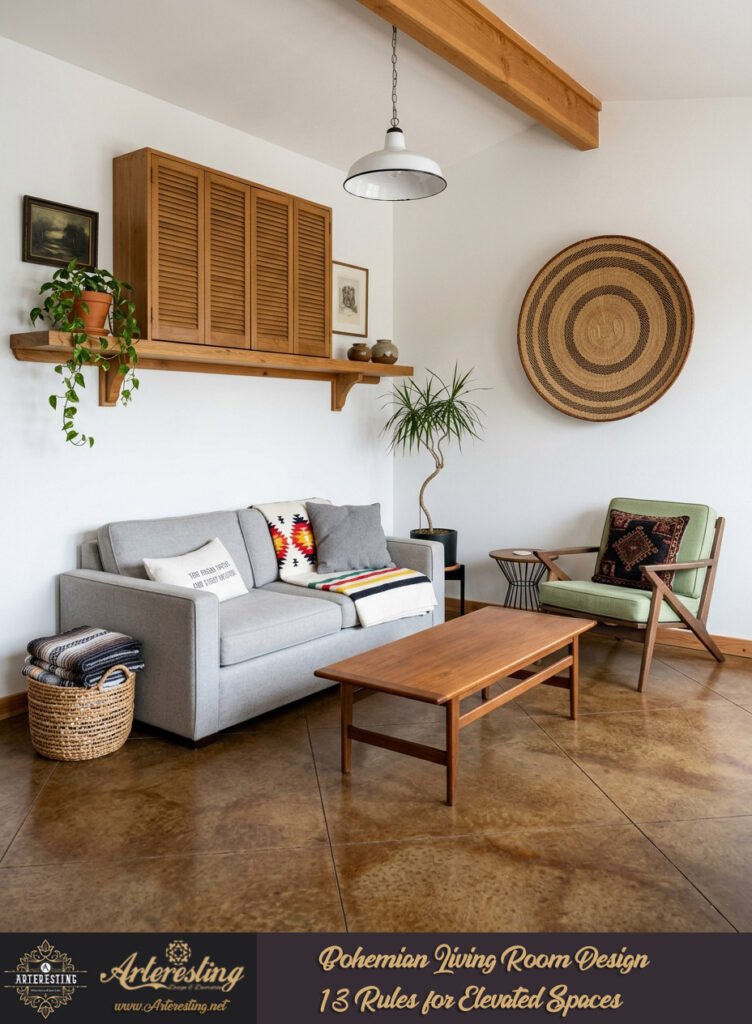
Elevating wicker baskets from storage to vertical decor introduces unexpected rustic geometry. Consequently, styling woven pieces on walls softens hard plaster and improves overall acoustic absorption.
Wicker diffuses harsh shadows beautifully. Cluster oversized, shallow baskets directly above seating areas. Specifically, this arrangement replaces traditional framed art with dimensional, shadow-casting texture. Thus, the wall becomes a tactile focal point.
8. Design a Chromatic Statement Wall
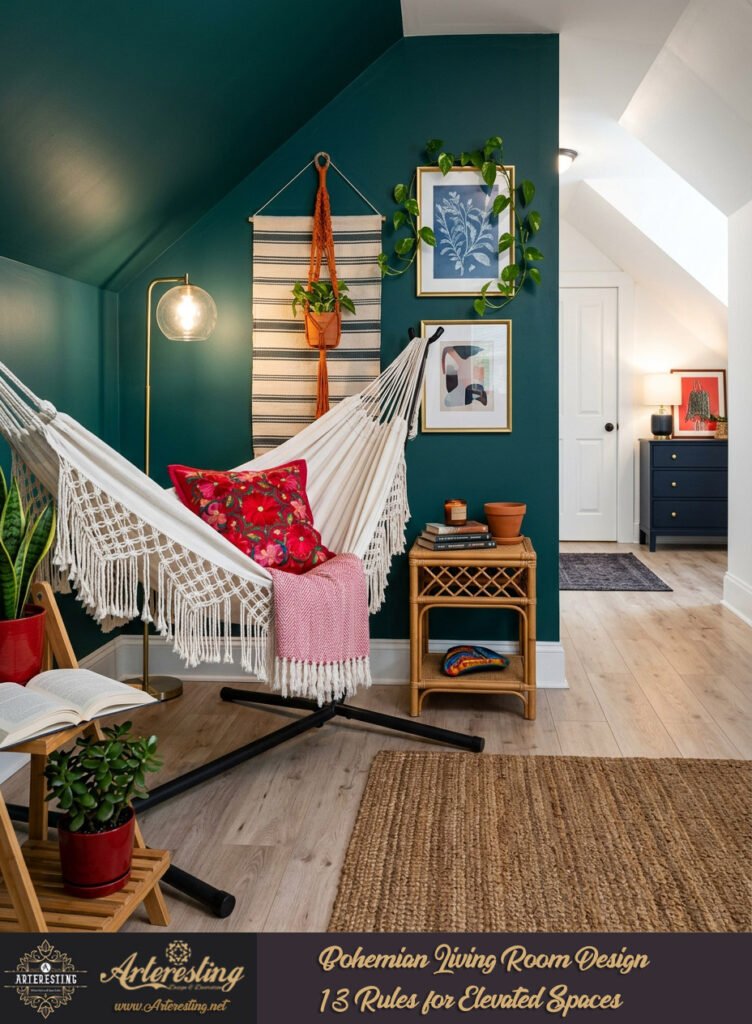
While neutrals dominate, deeply saturated statement walls provide dramatic contrast. For example, deep teal plaster accented by warm terracotta tones establishes a moody, immersive envelope.
Dark colors cause walls to recede visually. Often, this makes small rooms feel expansive. Furthermore, saturated backgrounds make brass accents pop violently. Therefore, pair a dark wall with low-slung, casual seating elements.
9. Integrate Trailing Live Foliage
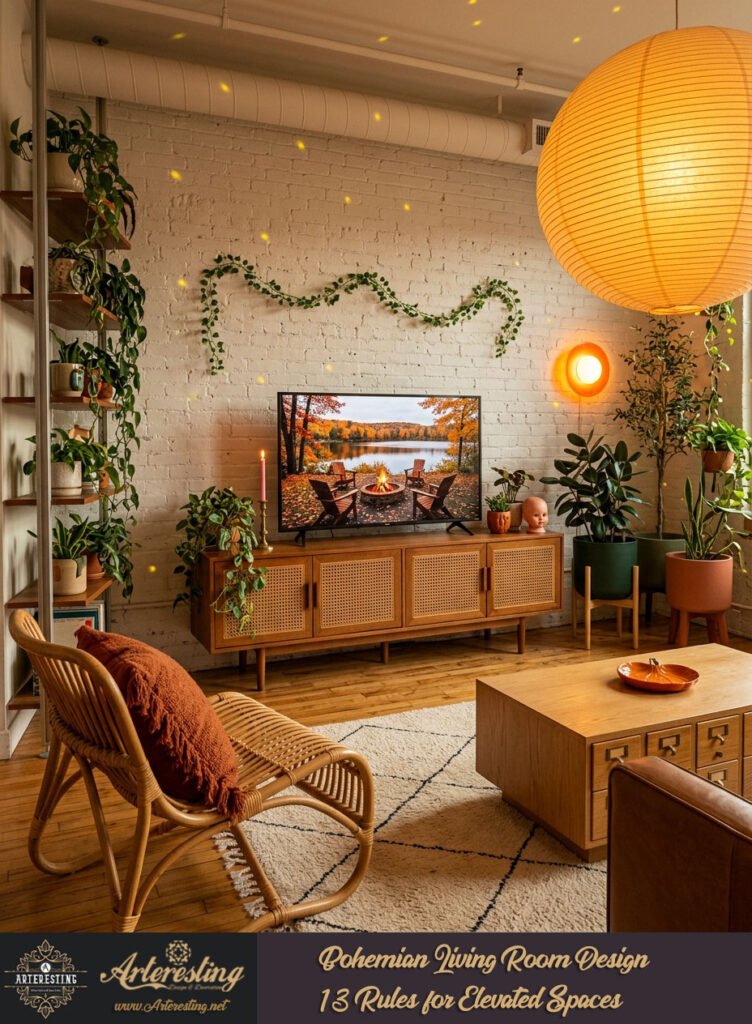
Indoor greenery acts as living architecture within a bohemian living room design. Specifically, trailing vines and structural palms blur the boundary between exterior environments and interior sanctuaries.
Plants introduce unpredictable, organic lines. Suspend ferns from the ceiling to draw attention upward. Alternatively, position large-leafed plants in floor corners to eliminate dead space. Crucially, vary planter heights for naturalistic layering.
10. Prioritize Purposeful Organization and Flow
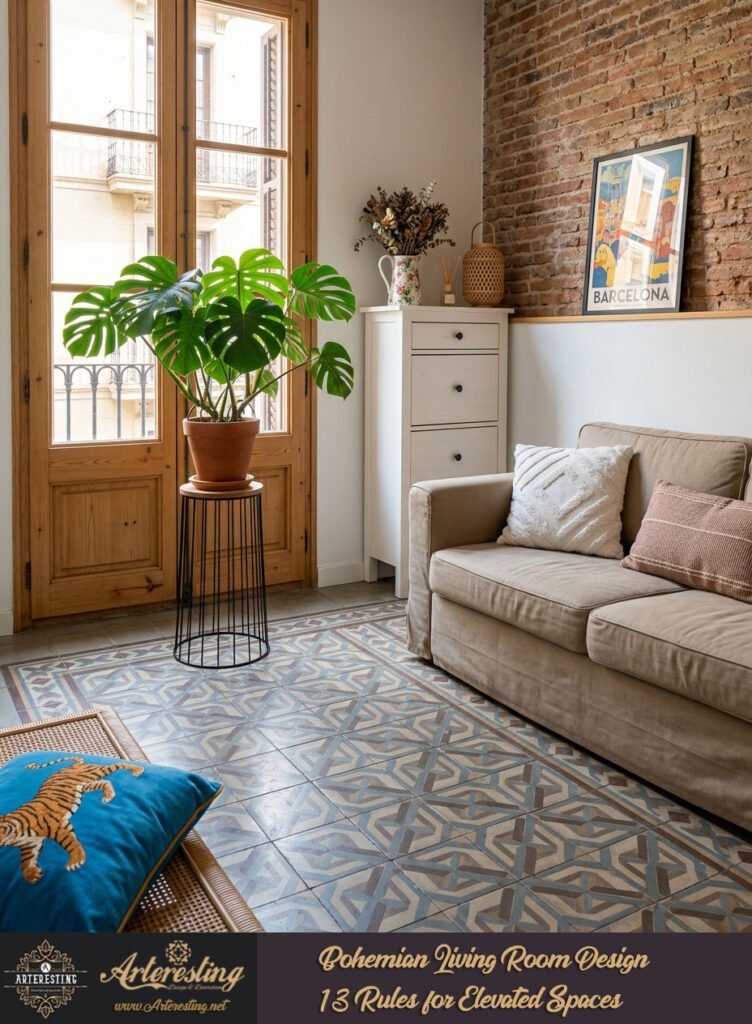
Sophisticated spaces master the illusion of casualness through rigorous underlying organization. Consequently, editing down to a few impactful pieces ensures the room feels free-spirited, never cluttered.
Negative space remains a powerful design tool. Allow the eye resting spots between dense vignettes. Specifically, utilize hidden storage to conceal everyday items. Thus, only highly curated objects remain visible.
11. Incorporate Organically Patterned Floor Rugs
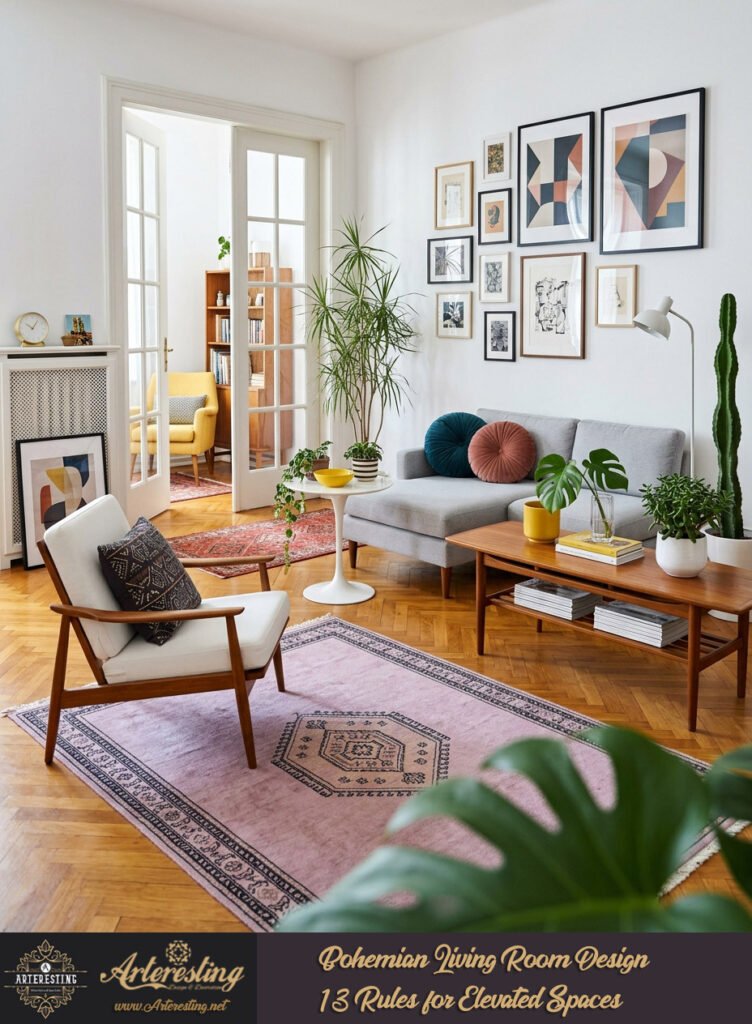
Layered, patterned rugs anchor furniture groupings and define specific zones in open floor plans. Visually, textiles introduce necessary color palettes without altering permanent architectural finishes.
A single rug often feels insufficient. Therefore, overlap a vintage Persian runner atop a large jute base. This technique adds literal warmth and acoustic dampening. Furthermore, it grounds the room’s lower sightlines.
12. Introduce High-Contrast Pops of Black Paint
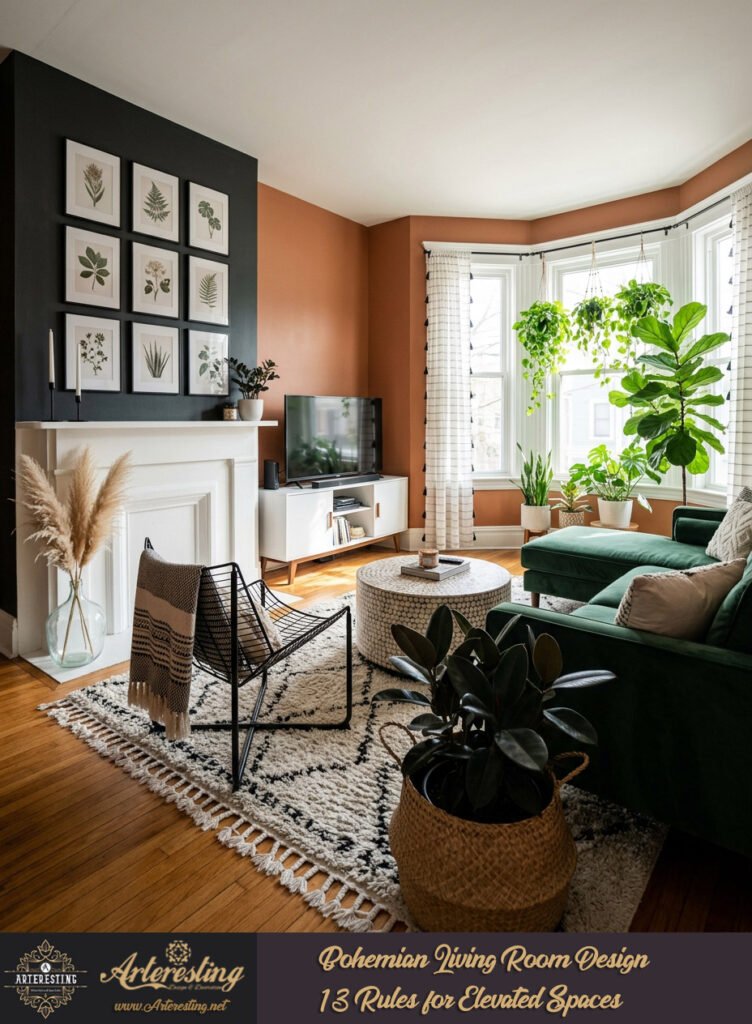
Strategic applications of matte black paint cut through visually soft textiles. Ultimately, dark accents anchor floaty rooms, adding sophisticated depth and necessary architectural contrast.
Pastel or purely earthy spaces risk looking muddy. Conversely, black hardware sharpens the surrounding colors. Use black sparingly in textiles or singular accent walls. Thus, it acts as a visual palette cleanser.
13. Anchor with Oversized Statement Decor
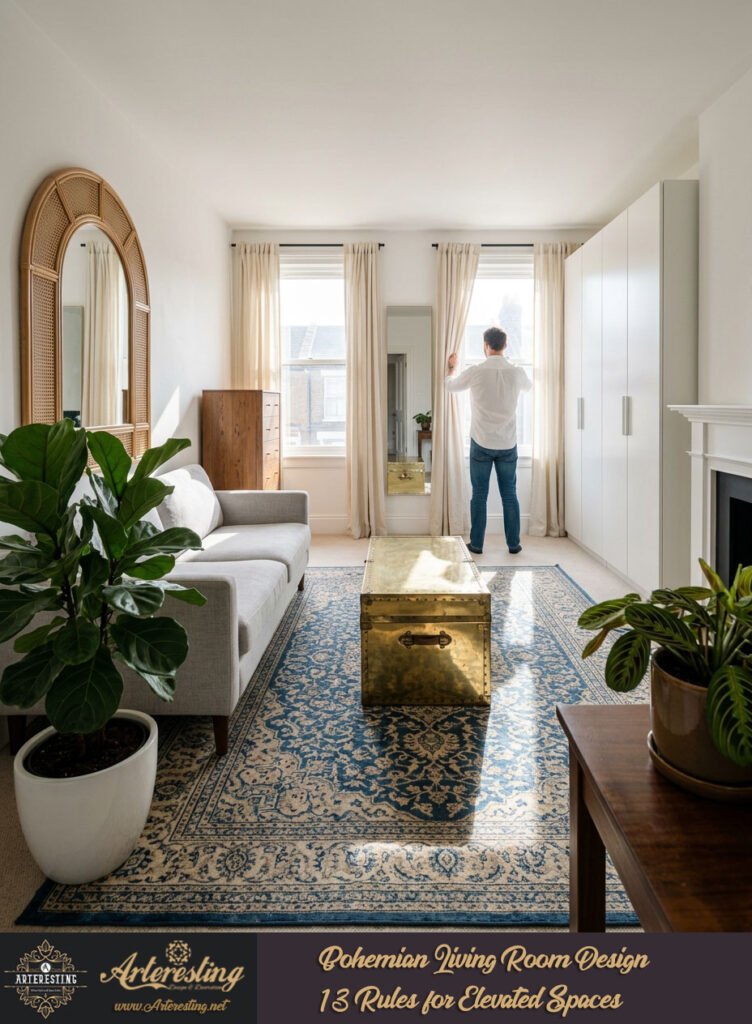
Deploying dramatically oversized decor challenges standard residential scale, creating immediate visual tension. Specifically, large-scale mirrors or statues dominate a wall, dictating the room’s entire energy flow.
Many small objects create visual static. Alternatively, one massive vintage mirror reflects light and doubles the perceived room volume. Therefore, lean oversized pieces directly against the wall. This reinforces an effortless, transient mood.
A successful bohemian living room design relies on a foundation of natural materials, low-slung furniture, and layered textiles. Structuring the space with genuine leather, rich wood millwork, and woven wall decor establishes architectural depth. Visually, combining earthy color palettes with strategic indoor greenery creates a relaxed, effortlessly cohesive environment.
The post Bohemian Living Room Design: 13 Rules for Elevated Spaces appeared first on Arteresting.


Comments
Post a Comment